Punjab Govt Announces 30,000 Tractors Scheme for Farmers Under Maryam Nawaz – 2026 Update
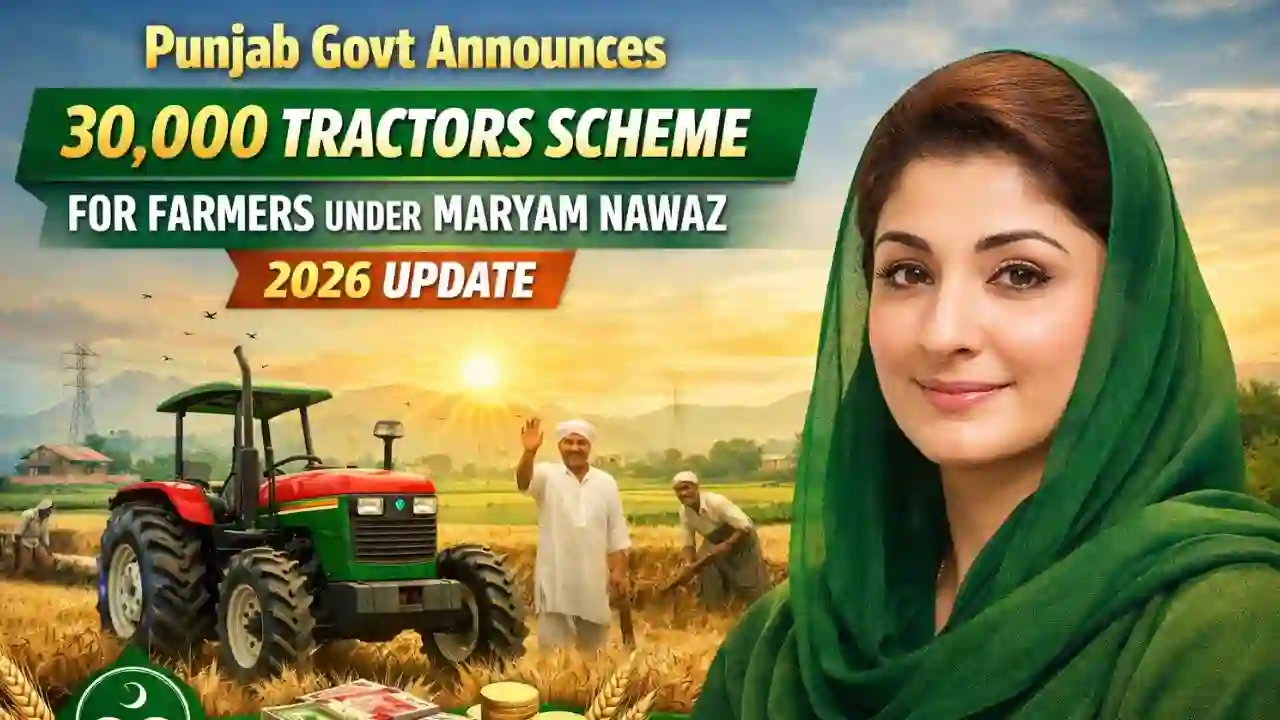
The Punjab Govt Announces 30,000 Tractors Scheme for Farmers Under Maryam Nawaz, marking one of the largest agriculture mechanization initiatives in Punjab’s history. The 2026 update of the scheme aims to modernize farming practices, reduce cultivation costs, and increase agricultural productivity by providing subsidized tractors to small and medium farmers across the province.
Agriculture remains the backbone of Punjab’s economy, employing millions and contributing significantly to food security. However, rising fuel prices, outdated equipment, and climate challenges have made farming increasingly expensive. The Punjab 30,000 Tractors Scheme 2026 is designed to directly address these challenges by enabling farmers to access modern machinery at affordable rates.
Overview of Punjab 30,000 Tractors Scheme 2026
Under the leadership of Chief Minister Maryam Nawaz, the Punjab government has prioritized farmer welfare as a core policy objective. The 30,000 Tractors Scheme is part of a broader agricultural reform agenda that includes seed subsidies, fertilizer support, interest-free loans, and digital farmer registration.
Key Highlights of the Scheme
- Total tractors to be distributed: 30,000
- Target year: 2026
- Beneficiaries: Small and medium farmers of Punjab
- Subsidy model: Government-supported price reduction
- Distribution method: Transparent digital balloting
- Coverage: All districts of Punjab
The scheme ensures that tractors are distributed fairly, avoiding political influence and favoritism through a computerized verification and draw system.

Objectives of the Punjab Tractors Scheme Under Maryam Nawaz
The Punjab Govt Tractors Scheme 2026 has been launched with multiple long-term goals aimed at transforming the agricultural sector.
Main Objectives
- Mechanization of agriculture to reduce reliance on manual labor
- Lowering production costs for farmers
- Increasing crop yield per acre
- Supporting small farmers who cannot afford tractors at market prices
- Improving rural livelihoods and income stability
- Ensuring food security amid population growth
By enabling access to tractors, farmers can prepare land faster, plant crops efficiently, and reduce post-harvest losses.

Who Can Apply for Punjab 30,000 Tractors Scheme 2026?
Eligibility criteria have been structured to ensure that genuine farmers benefit, especially those owning small landholdings.
Eligibility Criteria
- Applicant must be a Pakistani citizen
- Must be a resident of Punjab
- Must possess a valid CNIC
- Must be a registered farmer with the Punjab Agriculture Department
- Land ownership requirement:
- Minimum: 1 to 5 acres (priority category)
- Medium farmers may also be considered
- Applicant must not already own a tractor (or limited ownership allowed under specific conditions)
Tenant farmers registered through official land records may also be considered depending on district-level verification.

Subsidy Details – How Much Support Will Farmers Get?
One of the most attractive aspects of the Punjab Tractors Scheme 2026 is the heavy government subsidy, making tractors affordable for low-income farmers.
Expected Subsidy Structure
- Subsidy amount: Rs. 600,000 to Rs. 1,000,000 per tractor (estimated)
- Farmer contribution: Remaining amount payable in installments or upfront
- Tractor types: Locally manufactured, fuel-efficient models
- Engine capacity: Typically 50–85 HP (depending on farming needs)
The Punjab government may partner with local tractor manufacturers and banks to offer easy payment plans.

Application Process for Punjab Tractors Scheme 2026
The government has emphasized a simple and transparent application process using digital platforms.
Step-by-Step Application Method
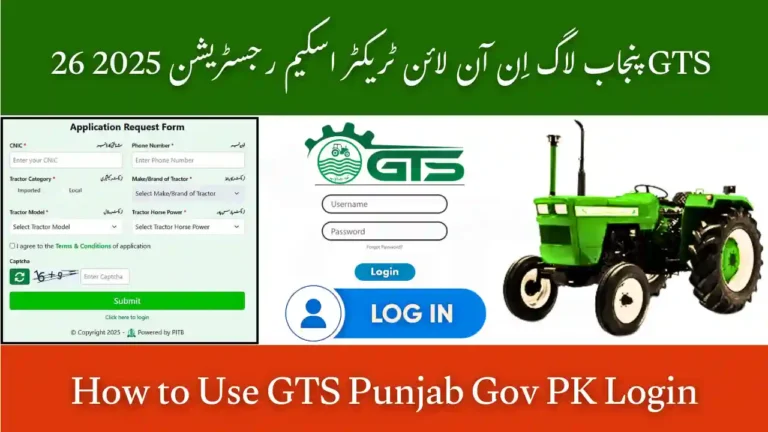
- Online Registration
- Visit the official Punjab Agriculture Department portal
- Create a farmer profile using CNIC
- Submit Required Details
- Land ownership records
- District and tehsil information
- Crop details
- Verification Process
- Data verified through land revenue and NADRA records
- Computerized Balloting
- Eligible applicants entered into a transparent draw
- Tractor Allocation
- Selected farmers receive official allotment letters
- Payment & Delivery
- Pay farmer’s share
- Tractor delivered through authorized dealerships
Offline assistance through agriculture offices and facilitation centers will also be available.
District-Wise Distribution Plan
The 30,000 tractors will be distributed across Punjab based on:
- Cultivable land area
- Number of registered farmers
- Crop intensity
Expected Priority Districts
- Bahawalpur
- Multan
- Rahim Yar Khan
- Faisalabad
- Sahiwal
- Gujranwala
- Dera Ghazi Khan
Backward and less-developed areas are expected to receive special quotas.
Role of Maryam Nawaz in Agricultural Reforms
Chief Minister Maryam Nawaz has consistently emphasized that farmer relief is central to Punjab’s economic stability. The Tractors Scheme complements other initiatives launched under her leadership, including:
- Green Tractor Program
- Free seed distribution
- Solar tube-well projects
- Digital farmer registration
Her administration has focused on data-driven policymaking, ensuring subsidies reach deserving farmers instead of middlemen.
Economic and Agricultural Impact of the Scheme
The Punjab 30,000 Tractors Scheme 2026 is expected to create a ripple effect across the rural economy.
Expected Benefits
- Higher crop yields due to timely land preparation
- Reduction in cultivation time
- Lower dependence on rented machinery
- Job creation in tractor manufacturing and maintenance
- Improved rural income levels
Experts believe mechanization could increase wheat, cotton, rice, and maize output by 10–20% over time.
Environmental Considerations
Modern tractors introduced under the scheme are expected to be:
- More fuel-efficient
- Lower in emissions
- Compatible with precision farming tools
This aligns with Punjab’s broader climate-smart agriculture strategy.
Challenges and Safeguards
While the scheme is ambitious, the government has introduced safeguards to prevent misuse.
Key Safeguards
- CNIC-based verification
- Land record cross-checking
- One tractor per eligible family
- Randomized digital balloting
Strict monitoring will ensure tractors are not resold or misused.
Future Expansion Plans
Officials have indicated that if the 30,000 Tractors Scheme proves successful, the government may:
- Increase the number in future phases
- Introduce electric or hybrid tractors
- Expand support to tenant farmers
Conclusion
The Punjab Govt Announces 30,000 Tractors Scheme for Farmers Under Maryam Nawaz – 2026 Update represents a major step toward modernizing Punjab’s agriculture sector. By providing subsidized tractors through a transparent system, the government aims to empower farmers, boost productivity, and strengthen food security.
If implemented effectively, this scheme could become a model for agricultural reform across Pakistan, ensuring that farmers receive direct, meaningful support rather than short-term relief.
Frequently Asked Questions (FAQs)
Q1: What is the Punjab 30,000 Tractors Scheme 2026?
It is a government subsidy program providing 30,000 tractors to eligible farmers at reduced prices.
Q2: Who launched the tractors scheme?
The scheme was launched under the leadership of Punjab Chief Minister Maryam Nawaz.
Q3: Who is eligible to apply?
Small and medium farmers residing in Punjab with valid CNIC and land records.
Q4: How much subsidy will farmers receive?
The subsidy may range from Rs. 600,000 to Rs. 1,000,000 per tractor.
Q5: How can farmers apply for the scheme?
Farmers can apply online through the Punjab Agriculture Department portal or via local agriculture offices.