GTS Phase 2 Remaining Tractor Balloting Announced Big Update for Farmers
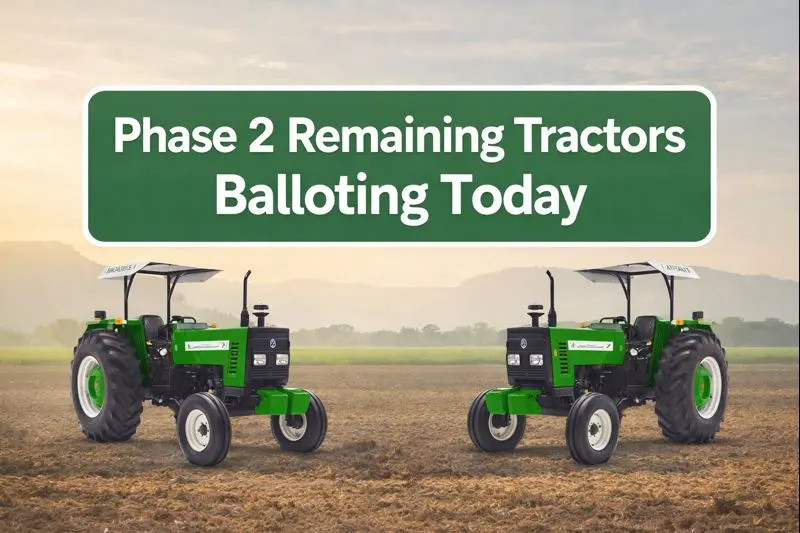
The Punjab Government has officially announced Phase 2 remaining tractor balloting under the Punjab Free Tractor Scheme 2026, bringing a major update for farmers across the province. This announcement is especially important for applicants who were not selected in Phase 1 and were waiting for another opportunity.
According to the Agriculture Department, Phase 2 balloting will be conducted for remaining tractors that could not be distributed earlier due to incomplete documentation, verification issues, or disqualified applications. The government has decided to redistribute these tractors through a transparent and fair balloting process.
This development has created renewed hope among thousands of small farmers who depend on government support to improve agricultural productivity.
Background of Punjab Free Tractor Scheme
The Punjab Free Tractor Scheme was launched to support small and deserving farmers by providing them tractors free of cost. The main goal of the scheme is to promote modern farming, reduce manual labor, and help farmers manage rising cultivation costs.
Due to high demand and limited resources, the government divided the scheme into multiple phases, ensuring step-by-step distribution and better monitoring.

Why Phase 2 Remaining Tractor Balloting Was Announced
After completion of Phase 1 balloting, the Agriculture Department reviewed the results and identified that:
- Some selected farmers failed to submit required documents
- Certain applications were rejected during verification
- A number of tractors remained unallocated
Instead of cancelling the scheme or holding these tractors, the government decided to announce Phase 2 balloting to give fair chance to waiting applicants.
This decision reflects the government’s commitment to maximum utilization of resources and farmer welfare.

What Is Included in Phase 2 Balloting?
Phase 2 balloting focuses only on remaining tractors. It is important to understand that:
Key Points of Phase 2
- No new registrations are allowed
- Only previously verified applicants are considered
- Balloting is conducted digitally
- Selection is purely random and transparent
This approach ensures that no favoritism or political influence affects the selection process.

Who Is Eligible for Phase 2 Balloting?
Eligibility criteria remain the same as Phase 1, but only existing applicants are included.
Eligible Farmers
- Farmers who applied earlier under the scheme
- Applicants who completed registration successfully
- Farmers who passed land and CNIC verification
- Applicants not selected in Phase 1
Not Eligible
- New applicants
- Incomplete or fake registrations
- Farmers already selected in Phase 1
Farmers are advised not to submit applications again, as duplicate entries are automatically rejected.

Phase 2 Balloting Process Explained
The Agriculture Department follows a strict procedure to ensure transparency.
Step-by-Step Process
- Final verification of pending applications
- Creation of digital balloting list
- Random computerized draw
- Approval by monitoring committee
- Official announcement of results
The entire process is supervised by senior officials to maintain credibility.
When Will Phase 2 Balloting Results Be Announced?
The government has confirmed that Phase 2 balloting has been officially announced, and results will be shared very soon through official channels only.
Farmers should:
- Regularly check official updates
- Keep application details ready
- Avoid relying on unofficial sources
Any exact date will be announced officially.
How Farmers Can Check Balloting Results
Once results are published, farmers can check their status using the following methods:
Official Channels
- Punjab Agriculture Department website
- Official government social media pages
- SMS notification (for selected farmers)
- Agriculture helpline
Farmers should never trust WhatsApp messages or agents claiming guaranteed selection.
Documents Required After Selection
Farmers selected in Phase 2 must complete documentation to receive the tractor.
Required Documents
- Original CNIC
- Proof of land ownership or tenancy
- Registered mobile number
- Application reference slip
Failure to submit documents within the given time may result in cancellation of selection.
Role of Punjab Agriculture Department
The Punjab Agriculture Department is responsible for:
- Application scrutiny
- Balloting execution
- Tractor procurement
- Fair distribution
The department has reiterated its policy of zero tolerance for corruption and warned against illegal practices.
Benefits of Free Tractor Scheme for Farmers
A tractor plays a key role in modern agriculture. Through this scheme, farmers benefit by:
- Saving labor costs
- Improving land preparation
- Increasing crop yield
- Reducing dependency on rented machinery
For small farmers, this support can significantly improve annual income.
Important Warning for Farmers
The government has clearly stated:
- The scheme is 100% free
- No payment is required at any stage
- Agents and middlemen are not authorized
Farmers are advised to report any fraud through official helplines.
Future Plans of Punjab Government
Officials have hinted that based on the success of Phase 2, the government may:
- Launch additional tractor schemes
- Increase quota for small farmers
- Introduce district-wise allocation
However, all future programs will be announced officially.
Official Helpline for Guidance
For complaints or information, farmers can contact:
Punjab Agriculture Helpline:
0800-17000
This helpline provides guidance regarding eligibility, balloting status, and complaints.
Conclusion – GTS Phase 2 Remaining Tractor Balloting Announced
The announcement of Phase 2 remaining tractor balloting is a major relief for farmers who were waiting after Phase 1. By redistributing remaining tractors through a transparent process, the Punjab Government has strengthened trust in public welfare schemes.
Eligible farmers should stay alert, follow official updates, and avoid misinformation. This initiative continues to support agricultural growth and improve livelihoods across Punjab.