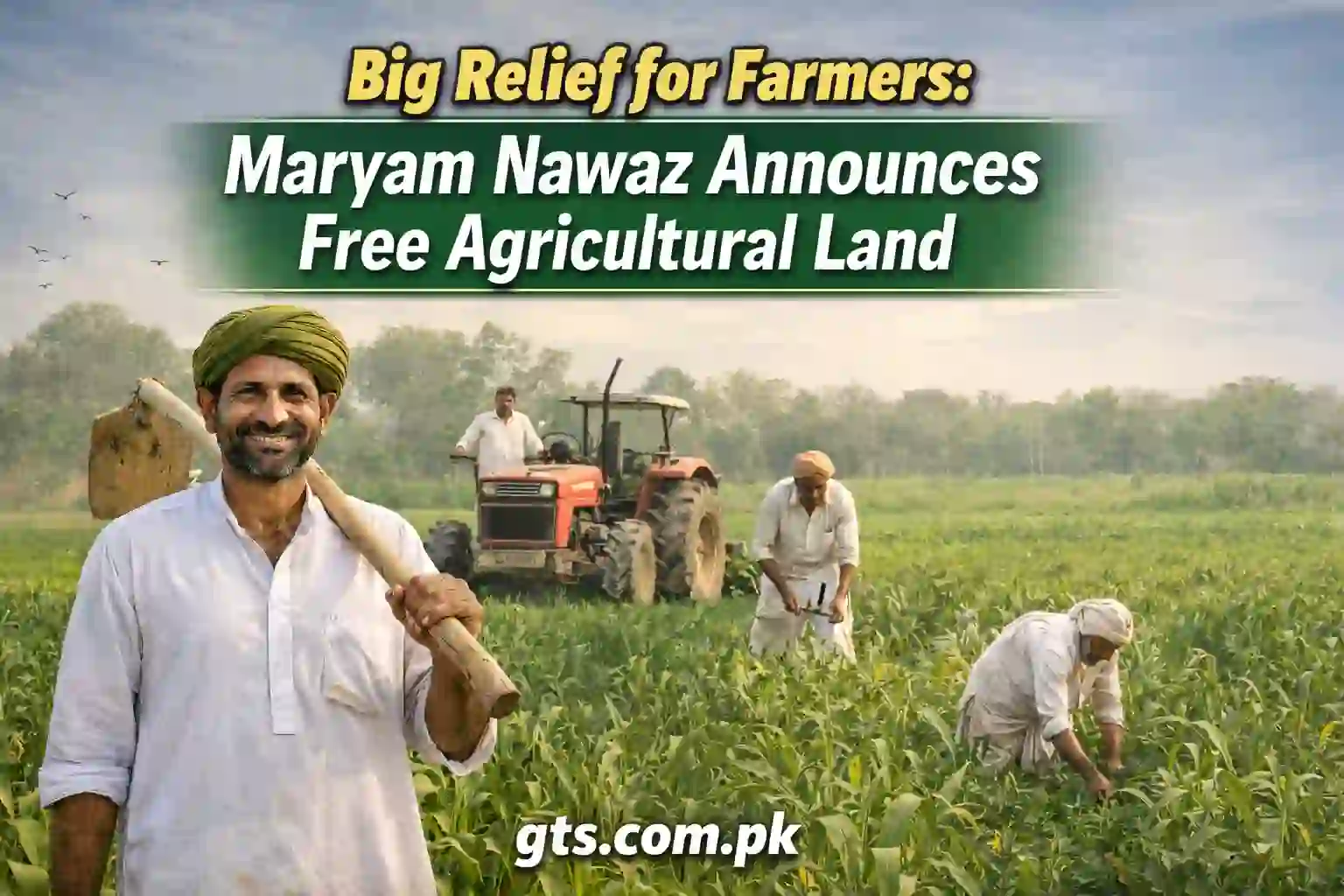
Big Relief for Farmers: Maryam Nawaz Announces Free Agricultural Land
In a major move to support the agriculture sector, Punjab Chief Minister Maryam Nawaz has announced a new initiative to provide free agricultural land to deserving farmers across the province. This decision is being seen as one of the biggest relief steps for farmers in recent years.
Agriculture is the backbone of Punjab’s economy. Thousands of families depend on farming for income, yet many farmers either do not own land or cultivate very small areas that barely support their families. Rising costs of seeds, fertilizer, and fuel have also made farming more difficult.
To address these problems, the Punjab government has decided to distribute agricultural land to farmers who do not have land or who have very limited farming resources. The aim is to improve livelihoods, increase food production, and reduce poverty in rural areas.
This announcement has created hope among farming communities across Punjab.
Why This Announcement Matters
For decades, many farmers have struggled because they do not own agricultural land. They work as tenants or daily wage laborers on other people’s farms. As a result, most of their earnings go to landowners, leaving them with little savings.
By giving land ownership or long-term usage rights, the government wants to change this situation. Farmers will finally have land they can cultivate independently.
This brings several benefits:
- Farmers gain financial independence.
- Families get stable income.
- Food production increases.
- Rural poverty reduces.
- Youth stay engaged in farming instead of moving to cities.
Experts believe land ownership gives farmers confidence to invest in better farming practices.

Key Features of the Free Land Initiative
Although detailed policy guidelines are still being finalized, officials have shared several expected features of the program.
Land Distribution to Landless Farmers
Priority will likely be given to farmers who do not own land at all or cultivate very small rented plots.
Government-Owned Land Utilization
Unused or state-owned agricultural land will be identified and prepared for farming. This land will then be distributed among eligible farmers.
Transparent Selection Process
Authorities have indicated that applications and selection will follow a transparent process to avoid favoritism or corruption.
Support Beyond Land
Officials suggest farmers may also receive technical assistance, seeds, or financial support to make the land productive.
Objectives Behind the Scheme
The Punjab government aims to achieve multiple goals through this initiative.
Strengthening Agriculture Sector
More farmers cultivating land means higher crop production, which strengthens food security for the province and country.
Poverty Reduction in Rural Areas
Land ownership directly improves economic conditions for rural families who previously worked as laborers.
Employment Opportunities
More farming activity creates jobs in harvesting, transport, storage, and agricultural services.
Preventing Urban Migration
When farming becomes profitable, rural youth are less likely to leave villages for cities in search of work.

Expected Impact on Farmers
Farmers across Punjab are welcoming this announcement. Many families who have worked on farms for generations without owning land now see an opportunity.
Better Income Stability
Farmers with their own land can grow crops without paying rent or sharing profits with landowners.
Investment in Better Farming
Ownership motivates farmers to invest in modern irrigation, better seeds, and improved cultivation techniques.
Improved Living Standards
Stable farming income can improve housing, education, and healthcare access for rural families.

Challenges That May Arise
While the plan is promising, some challenges may need attention for successful implementation.
Land Availability
The government must ensure enough suitable land is available for distribution without affecting existing farming communities.
Fair Selection Process
Ensuring only deserving farmers benefit will require strict monitoring.
Infrastructure Support
Farmers also need water supply, roads, and electricity to make land productive.
Training and Guidance
New landowners may need training in modern agriculture practices to maximize productivity.
Experts suggest combining land distribution with agricultural training programs.
Reaction from Farming Community
Initial reactions from farmers have been positive. Many see this initiative as long overdue.
Farmers believe this decision shows that the government understands rural problems and wants to provide practical solutions.
Agriculture experts say if the plan is properly implemented, it can transform farming communities across Punjab.
Some farmer groups have requested the government to also provide:
- Easy agricultural loans
- Subsidized fertilizer and seeds
- Crop insurance support
- Market price protection
Such measures could further strengthen farmer income.
How Farmers Can Prepare
Although application procedures are not officially announced yet, farmers can prepare in advance.
Keep Necessary Documents Ready
Farmers should keep identification documents and any farming-related records ready for future registration.
Stay Updated Through Official Sources
Farmers should follow government announcements and avoid relying on rumors or unofficial information.
Prepare Farming Plans
Farmers can plan which crops they want to grow and how they will manage new land if selected.
Role of Agriculture in Punjab’s Economy
Punjab contributes a major share to Pakistan’s agricultural production, including wheat, rice, sugarcane, and vegetables.
However, rising costs and land ownership inequality have slowed growth in recent years.
Experts believe providing land access can revive agriculture by empowering small farmers.
Better agriculture also means:
- Lower food prices
- Increased exports
- Higher rural employment
- Economic stability
Government’s Broader Agriculture Vision
The free land announcement appears to be part of a larger plan to modernize agriculture in Punjab.
Other expected agriculture-focused steps include:
- Mechanization support
- Farmer training programs
- Irrigation improvements
- Digital agriculture services
- Crop insurance systems
Such reforms aim to make agriculture more profitable and sustainable.
What Happens Next?
The next steps will include:
- Identification of government land.
- Policy approval and legal framework.
- Application process launch.
- Selection of eligible farmers.
- Land allocation and support services.
Farmers are now waiting for official registration details.
Possible Long-Term Benefits
If properly implemented, the initiative can produce long-term positive outcomes:
- Reduced rural poverty
- Increased crop production
- Improved farmer living standards
- Economic growth in villages
- Stronger food security
Experts note that land ownership has historically improved farming productivity worldwide.
Conclusion – Maryam Nawaz Announces Free Agricultural Land
Maryam Nawaz’s announcement to provide free agricultural land to farmers has brought hope to thousands of farming families in Punjab. Land ownership has long been a dream for many rural workers who have spent years cultivating others’ land.
This initiative could become a turning point for Punjab’s agriculture if implemented fairly and supported with proper infrastructure and training.
Farmers, agriculture experts, and rural communities are now waiting for further details on how the scheme will roll out.
If successful, the program could not only improve farmers’ incomes but also strengthen the entire agriculture sector, benefiting both rural and urban populations through better food supply and economic stability.
The coming months will show how this major announcement transforms into practical relief for farmers across Punjab.
Punjab Chief Minister Maryam Nawaz has announced a plan to distribute free agricultural land to farmers, particularly benefiting landless families. The initiative aims to boost agriculture, reduce rural poverty, and improve food production across the province. Further details about registration and land distribution are expected soon.