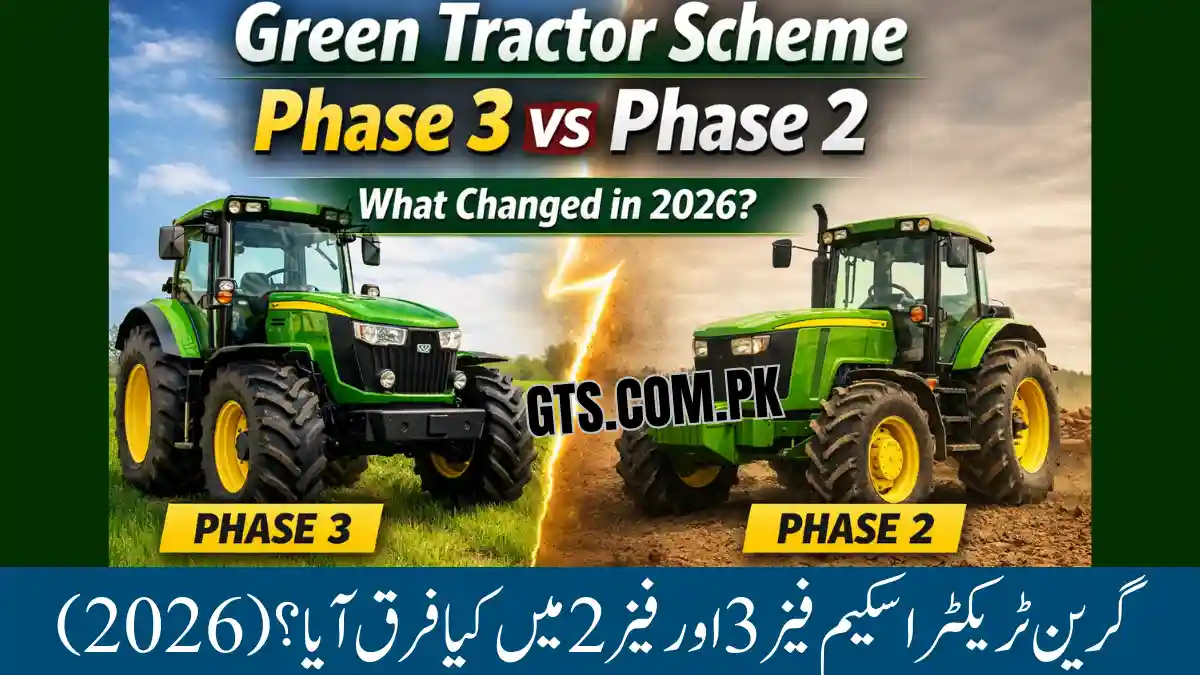
Green Tractor Scheme Phase 3 vs Phase 2 – What Changed in 2026?
Green Tractor Scheme Phase 3 vs Phase 2 Comparison has become one of the most discussed topics among farmers in 2026, especially after the government introduced several practical updates to improve access, transparency, and long-term benefits.
Introduction
The CM Punjab Green Tractor Scheme has played a major role in helping farmers modernize their agricultural practices through subsidized tractors. Over time, the program has evolved to address real challenges faced on the ground. When Phase 2 was launched, it brought relief to thousands of farmers, but it also revealed gaps that needed correction. Phase 3 arrived with the promise of fixing those issues while expanding benefits further.
This article explores Green Tractor Scheme Phase 3 vs Phase 2 Comparison in detail, breaking down what truly changed, why those changes matter, and how farmers can benefit more effectively in 2026 and beyond. Every section is written in clear, simple English so that farmers, agricultural advisors, and policy followers can easily understand the differences.

Overview of the Green Tractor Scheme
Before comparing the two phases, it is important to understand the basic idea behind the scheme.
The Green Tractor Scheme was designed to:
- Improve mechanization in agriculture
- Reduce dependence on outdated equipment
- Support small and medium-scale farmers
- Increase productivity and income stability
The government provides a subsidy on selected tractor models, allowing eligible farmers to purchase modern tractors at a reduced cost. Each phase of the scheme has refined this process based on farmer feedback and implementation results.
Phase 2: Key Features and Limitations
Phase 2 was a significant step forward, but it was not without challenges. Understanding these limitations helps explain why Phase 3 looks the way it does today.
Main Features of Phase 2
- Fixed subsidy amount regardless of region
- Limited tractor models approved
- Manual verification process
- First-come, first-served allocation system
Challenges Faced by Farmers
Many farmers appreciated the financial support but struggled with delays, documentation issues, and limited choices. Some of the most common phase 2 differences reported by applicants included:
- Long approval timelines
- Unequal access for remote-area farmers
- Fewer options for low-horsepower and eco-friendly tractors
These challenges laid the foundation for major reforms introduced later.
Phase 3: What’s New in 2026?
Phase 3 was launched with a clear goal: make the scheme fairer, faster, and more aligned with modern farming needs.
Key Upgrades Introduced
- Digital application and tracking system
- Expanded list of approved tractor brands
- Variable subsidy based on landholding size
- Priority scoring instead of random selection
The scheme changes 2026 reflect a more farmer-centric approach, focusing on transparency and efficiency rather than speed alone.
Green Tractor Scheme Phase 3 vs Phase 2 Comparison: Core Differences
This section focuses specifically on Green Tractor Scheme Phase 3 vs Phase 2 Comparison, highlighting structural and functional changes that directly impact farmers.
Administrative Process
Phase 2 relied heavily on manual verification, while Phase 3 introduced:
- Online document submission
- Real-time status updates
- Reduced dependency on middlemen
This shift alone has significantly reduced corruption complaints and processing delays.
Fairness and Accessibility
Phase 3 prioritizes applicants based on need, region, and land size. This addresses earlier concerns where influential farmers secured subsidies faster than smallholders.
Subsidy Structure Comparison
One of the most important updates relates to financial support.
How Subsidies Changed
Under Phase 2, all approved farmers received the same subsidy amount. Phase 3 introduced a tier-based model, ensuring better support for those who need it most.
Subsidy Comparison Table
| Category | Phase 2 Subsidy | Phase 3 Subsidy |
|---|---|---|
| Small Farmers | Fixed amount | Higher percentage |
| Medium Farmers | Fixed amount | Moderate percentage |
| Large Farmers | Fixed amount | Lower percentage |
| Eco-friendly Models | Limited | Higher incentives |
This subsidy comparison shows how Phase 3 distributes funds more fairly and efficiently.
Eligibility Criteria: Then vs Now
Eligibility rules were another area where farmers demanded clarity.
Phase 2 Eligibility
- Land ownership required
- Limited flexibility for tenant farmers
- Basic documentation checks
Phase 3 Eligibility Improvements
- Inclusion of registered tenant farmers
- Digital land record verification
- Regional priority scoring
The improved eligibility comparison ensures that deserving farmers are no longer excluded due to outdated rules.
Tractor Models and Technology Upgrades
Modern farming requires modern machinery, and Phase 3 recognized this reality.
Approved Models in Phase 2
- Limited horsepower range
- Fewer brands
- Minimal fuel efficiency standards
Expanded Options in Phase 3
- Low-emission and fuel-efficient tractors
- Wider horsepower categories
- Local and international brands included
The tractor models difference is particularly beneficial for farmers with specialized needs, such as orchard farming or small landholdings.
Digitalization and Transparency
One of the most praised upgrades in Phase 3 is the complete digital overhaul.
Benefits of Digital Systems
- Reduced paperwork
- Faster approvals
- Lower risk of application rejection
Farmers can now track their applications without visiting offices repeatedly, saving time and money.
Impact on Farmers’ Daily Operations
The real success of any scheme lies in how it improves daily life.
Practical Benefits in Phase 3
- Faster tractor delivery
- Reduced maintenance costs
- Better resale value
These improvements translate directly into increased productivity and income stability. The long-term farmer benefits of Phase 3 are far more sustainable than previous versions.
Environmental Considerations
Phase 3 also aligns with environmental goals by encouraging cleaner technology.
- Incentives for low-emission engines
- Promotion of fuel-efficient models
- Reduced carbon footprint in farming
This shift supports sustainable agriculture while lowering operating costs.
Regional and Small Farmer Advantages
Small farmers in remote regions were often overlooked in Phase 2. Phase 3 corrected this imbalance by:
- Assigning regional quotas
- Offering mobile verification units
- Supporting cooperative ownership models
This inclusive approach ensures equal opportunity nationwide.
Common Misunderstandings About Phase 3
Despite improvements, misinformation still circulates.
Clarifying Key Myths
- Phase 3 is not limited to large farmers
- Digital application does not require advanced tech skills
- Subsidy amounts vary but overall support increased
Understanding these points helps farmers apply with confidence.
Long-Term Economic Impact
The economic ripple effect of Phase 3 extends beyond individual farmers.
- Increased mechanization boosts crop output
- Local tractor dealerships grow
- Rural employment opportunities expand
These outcomes strengthen the agricultural economy as a whole.
Comparison Summary Table
To make things easier, here is a clear side-by-side overview:
| Feature | Phase 2 | Phase 3 |
|---|---|---|
| Application Process | Manual | Fully digital |
| Subsidy Model | Fixed | Tier-based |
| Tractor Options | Limited | Expanded |
| Transparency | Moderate | High |
| Environmental Focus | Low | Strong |
This table reinforces the key findings of Green Tractor Scheme Phase 3 vs Phase 2 Comparison in a simple, visual format.
FAQs
1. Is Phase 3 better for small farmers?
Yes, Phase 3 offers higher subsidies and priority scoring for small farmers, making access fairer.
2. Can tenant farmers apply under Phase 3?
Registered tenant farmers are now eligible, provided they meet documentation requirements.
3. Are more tractor brands available in Phase 3?
Yes, the approved list has expanded significantly to include modern and eco-friendly models.
4. Does digital application reduce approval time?
In most cases, digital processing has cut approval time by more than half.
5. Will there be a Phase 4?
While not officially announced, ongoing evaluations suggest further improvements may come.
Conclusion
After a detailed review, it is clear that Green Tractor Scheme Phase 3 vs Phase 2 Comparison highlights a strong shift toward fairness, transparency, and long-term sustainability. Phase 3 is not just an update; it is a practical response to real farmer needs. From better subsidies and expanded eligibility to improved tractor options and digital access, the changes introduced in 2026 make the scheme more effective than ever.
Farmers who understand these updates can make smarter decisions, apply with confidence, and gain maximum value from the program. As agriculture continues to modernize, Phase 3 sets a strong foundation for future growth and stability.