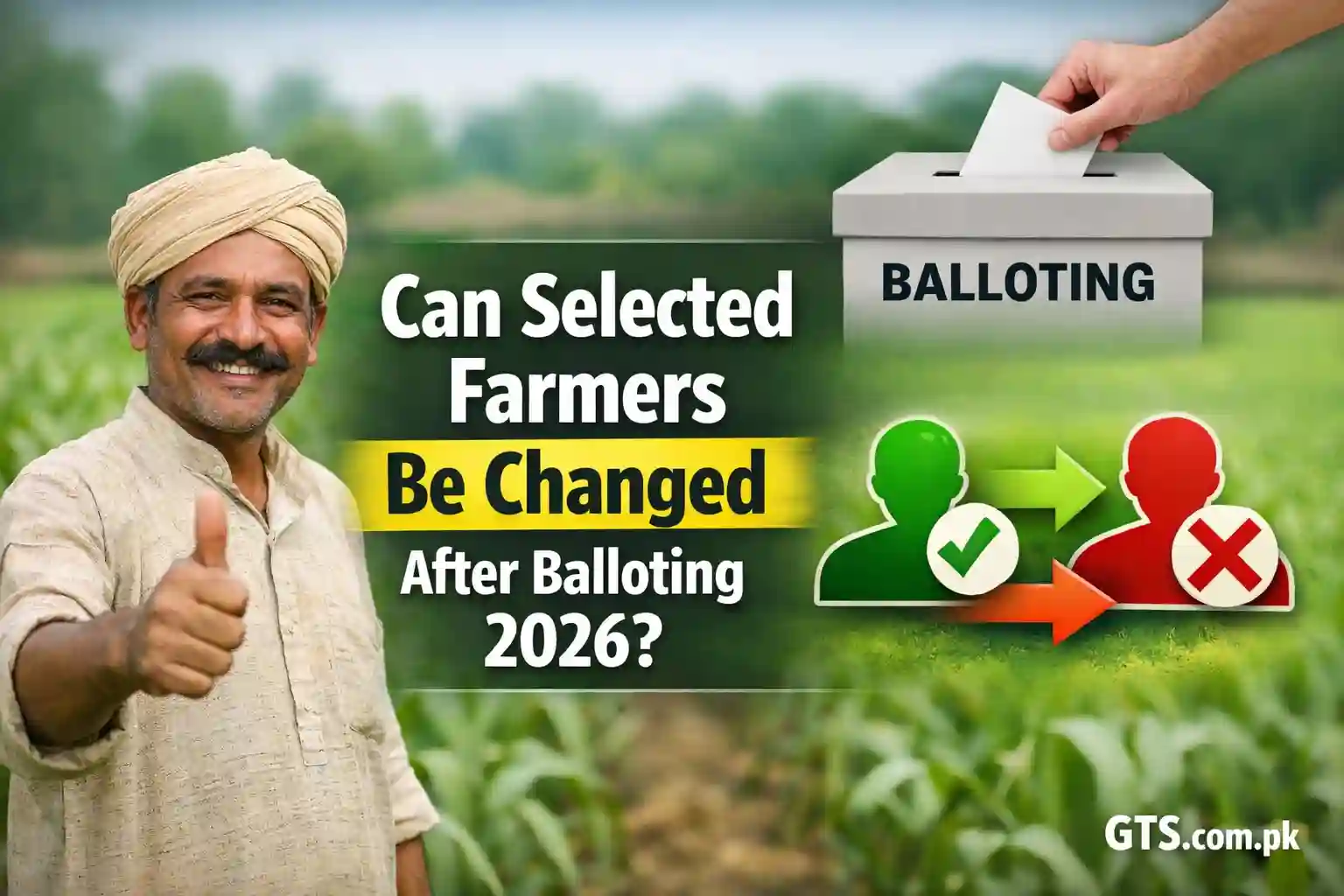
Can Selected Farmers Be Changed After Balloting 2026
Can Selected Farmers Be Changed After Balloting is one of the most common and sensitive questions farmers ask after the results of government tractor and subsidy schemes are announced. When livelihoods, long-term planning, and trust in public programs are involved, clarity matters more than rumors or assumptions.
Balloting-based schemes are designed to be fair, transparent, and rule-driven. Still, situations arise where farmers believe a mistake was made or that changes should be possible. This article explains how the process actually works, what the rules allow, and where farmer rights begin and end, especially under large-scale initiatives like the Punjab Tractor Scheme.
Understanding Balloting-Based Farmer Selection
Government agricultural schemes use balloting to remove favoritism and human bias. Once applications close, eligible farmers enter a computerized draw. Every selected name is backed by system-generated records.
The purpose of balloting is simple:
- Ensure equal opportunity
- Prevent manual interference
- Maintain public trust
- Create an auditable process
Once results are published, the list is treated as official. That does not mean errors never happen, but it does mean changes are tightly controlled.
Can Selected Farmers Be Changed After Balloting
This is where policy and reality meet. Can Selected Farmers Be Changed After Balloting depends entirely on whether the issue falls under allowed exceptions or not.
In most cases, the answer is no. Balloting results are considered final once officially announced. However, limited changes may be allowed if strict conditions are met and verified through formal channels.
Changes are not made because of requests, pressure, or recommendations. They are only made when documented violations of rules are proven.
Why Balloting Results Are Usually Final
Balloting systems are protected by rules for good reason. If selected farmers could be replaced easily, the entire process would lose credibility.
Here is why authorities keep results final:
- To protect fairness for all applicants
- To avoid political or personal influence
- To ensure transparency in public spending
- To reduce disputes and legal challenges
Allowing frequent changes would open the door to misuse and favoritism.
Situations Where Changes May Be Allowed
Although rare, some scenarios can lead to adjustments. These are exceptions, not options.
Disqualification After Verification
If a selected farmer fails post-balloting verification, authorities may cancel the selection. Common reasons include:
- Fake or incomplete land records
- Duplicate applications
- Ineligible land size
- False identity information
In such cases, the next eligible farmer in line may be considered, depending on Balloting Rules.
Administrative or Technical Errors
Sometimes errors occur during data entry or system processing. These may include:
- Incorrect CNIC numbers
- Duplicate database records
- System-generated mismatches
If proven, corrections can be made under the GTS Replacement Policy, but only after a formal audit.

Role of the GTS Replacement Policy
The GTS Replacement Policy exists to handle exceptional cases, not routine changes. It clearly defines when and how a replacement can happen.
Key points of the policy include:
- No replacements without written proof
- Independent verification is mandatory
- Requests must be submitted within a defined timeframe
- Political or external recommendations are not accepted
This policy protects both farmers and the system itself.
Phase-Based Schemes and Change Possibilities
Large schemes often run in phases, which creates confusion among applicants.
Phase 3 and Similar Rounds
Under Phase 3 Changes, authorities sometimes reopen verification for new batches. However, this does not mean previous winners can be swapped.
Each phase is treated independently:
- Phase 1 winners remain final
- Phase 2 winners remain final
- Phase 3 only affects new applicants
Old results are not revised unless a serious violation is proven.
What Farmers Can and Cannot Request
Understanding Farmer Rights is critical. Many farmers believe they can appeal simply because they were not selected. That is not how the system works.
What Farmers Can Do
- Request verification of their application status
- File a complaint if eligibility rules were ignored
- Report fraud or impersonation
- Ask for clarification through official channels
What Farmers Cannot Do
- Demand replacement of a selected farmer
- Transfer selection to a family member
- Influence results after announcement
- Bypass verification rules
Knowing this helps farmers avoid wasted time and false expectations.
Official Winner Updates and Transparency
Every scheme provides official communication channels for result announcements and corrections.
A Winner Update is considered valid only if:
- Published on the official portal
- Announced through authorized SMS or letters
- Issued by the program’s managing department
Social media messages, WhatsApp forwards, or verbal claims have no legal value.
Table: Common Reasons for Selection Cancellation
| Reason for Cancellation | Is Replacement Allowed | Verification Required |
|---|---|---|
| Fake documents | Yes | Yes |
| Duplicate application | Yes | Yes |
| Ineligible land size | Yes | Yes |
| Personal request | No | Not applicable |
| Political pressure | No | Not applicable |
This table shows that only rule-based violations can lead to changes.
How to Seek Help the Right Way
Farmers who believe an error has occurred should follow the official process instead of relying on agents or middlemen.
Proper Support Channels
- District agriculture offices
- Official helpline numbers
- Online complaint portals
- GTS Help desks
Using proper channels increases the chance of a fair review and protects farmers from scams.
Table: Correct vs Incorrect Complaint Approaches
| Approach | Outcome | Risk Level |
|---|---|---|
| Official written complaint | Reviewed | Low |
| Online portal submission | Tracked | Low |
| Agent or middleman | Ignored | High |
| Political reference | Rejected | Very High |
This comparison helps farmers choose the safest path.
Why Transparency Matters for Farmers
When farmers understand how balloting works, trust increases. Transparency also reduces misinformation, protests, and unrealistic expectations.
Clear rules ensure:
- Equal treatment
- Predictable outcomes
- Reduced corruption risks
- Long-term program sustainability
This benefits both farmers and the government.
Frequently Asked Questions
Can results be changed after final announcement?
Only if serious rule violations or verified errors are proven through official review.
Can a selected farmer give their spot to someone else?
No. Selections are non-transferable under all conditions.
Does Phase 3 reopen old selections?
No. Phase 3 Changes apply only to new applicants.
Where can farmers file official complaints?
Through agriculture offices, online portals, or GTS Help centers.
Final Thoughts
Can Selected Farmers Be Changed After Balloting is a valid concern, but the answer is governed by strict rules, not opinions or influence. Balloting systems exist to protect fairness, and changes are allowed only when clear violations are proven through official verification.
Farmers who understand the process, respect the rules, and use proper complaint channels are better protected and better informed. Transparency, patience, and accurate information remain the strongest tools for navigating any government support scheme.