Bank Financing Options For Remaining Amount Of Green Tractor Scheme
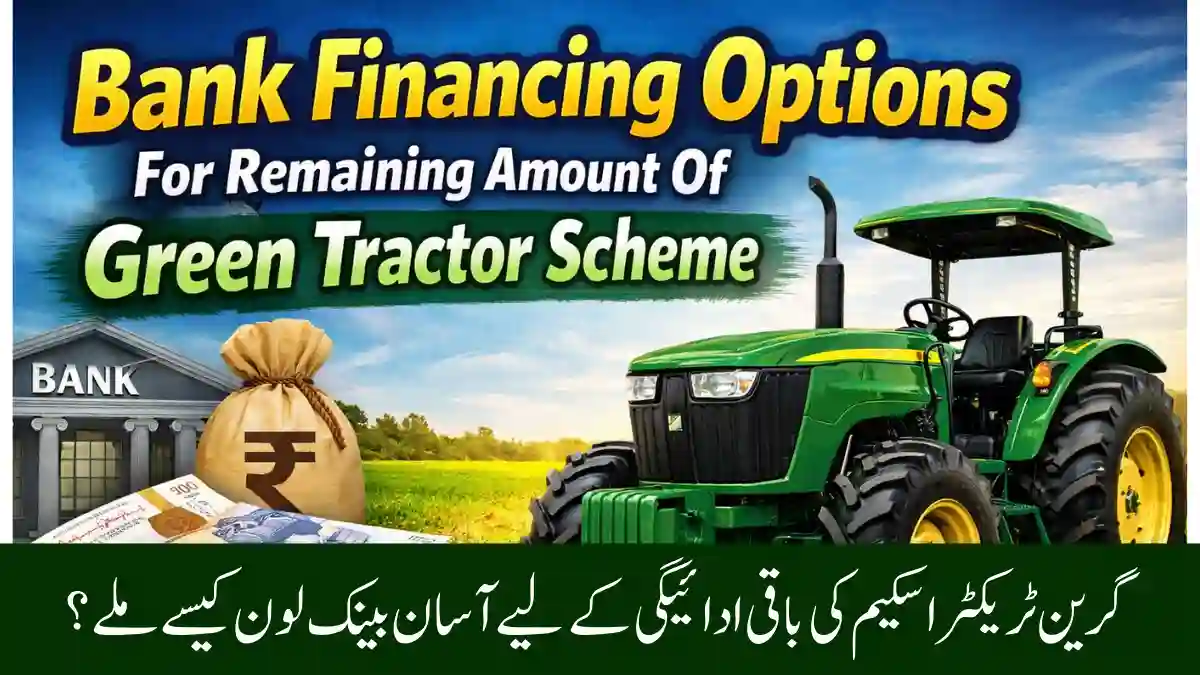
Bank Financing Options For Remaining Amount Of Green Tractor Scheme is one of the most searched topics among farmers who have already been approved for the subsidy and now need to arrange the balance payment.
Farmers across Pakistan are excited about the Green Tractor Scheme, but many still face one important challenge. After receiving government support, a large portion of the tractor price still needs to be paid. For most farmers, paying this amount in cash is not realistic. This is where banks, agricultural credit programs, and installment plans step in to make ownership possible.
In this detailed article, you will learn how financing works, what banks are offering, who can apply, how installments are calculated, and how to choose the best option for your farm. Everything is explained in clear and simple English so that you can make the right financial decision with confidence.
Bank Financing Options For Remaining Amount Of Green Tractor Scheme
When a farmer is approved under the Green Tractor Scheme, the government provides a subsidy that reduces the price of the tractor. However, the farmer must still pay the remaining amount. Bank Financing Options For Remaining Amount Of Green Tractor Scheme exist to help farmers pay this balance through affordable monthly installments instead of a large one-time payment.
Banks and financial institutions work with the government to offer special loans designed for farmers. These loans are usually easier to get than normal commercial loans and come with lower interest rates, flexible repayment periods, and agriculture-friendly terms.
These financing options allow farmers to:
- Get their tractor immediately
- Spread payments over months or years
- Avoid selling crops or livestock in a rush
- Improve farm productivity without financial stress
This system ensures that even small and medium farmers can benefit from modern machinery.
How the Green Tractor Scheme and Bank Loans Work Together
The Green Tractor Scheme gives a fixed subsidy on selected tractor models. Once a farmer is approved, the government pays the subsidy directly to the tractor company or dealer. The farmer is responsible for paying the rest.
This is where Tractor Loan Pakistan products come in. Banks provide loans for the remaining amount, and the farmer repays the bank in installments. This model ensures transparency and makes the whole process smoother.
The typical process looks like this:
- Farmer applies for Green Tractor Scheme
- Government approves and grants subsidy
- Dealer confirms tractor price
- Bank finances the remaining amount
- Farmer pays monthly installments to the bank
Banks also verify documents and make sure the tractor is properly registered before releasing the loan.
Who Can Apply for Bank Financing
Not every applicant is eligible for financing. Banks follow certain rules to reduce risk and ensure that only serious farmers receive loans.
You can usually apply if you:
- Are approved under the Green Tractor Scheme
- Own or lease agricultural land
- Have a valid CNIC
- Can show basic income or crop records
- Have a good repayment history
Many banks also accept small farmers because agricultural income is seasonal. They design repayment schedules that match crop cycles, making it easier to pay.
This is why Bank Financing Options For Remaining Amount Of Green Tractor Scheme are considered farmer-friendly and practical.
Types of Bank Financing Available
Different banks offer different structures, but most financing options fall into three main categories.
Fixed Installment Loans
These loans have a fixed monthly payment. You pay the same amount every month until the loan is cleared. This option is good for farmers who prefer predictable expenses.
Seasonal Repayment Loans
These loans are designed for farmers who earn income only during harvest seasons. Payments are due after crops are sold. Many GTS Bank Loan products fall under this category.
Hybrid Plans
These plans combine low monthly payments with larger seasonal payments. They are ideal for farmers with mixed income sources.
Important Costs to Consider Before Taking a Loan
While financing makes tractors affordable, farmers must understand all costs involved.
These include:
- Interest rate
- Processing fee
- Insurance
- Registration and documentation
- Late payment penalties
Understanding these charges helps avoid surprises later. Most banks are transparent, but you should always ask for a full cost breakdown.
Comparison of Bank Financing Options
Before choosing a bank, it helps to compare what different lenders offer. Bank Financing Options For Remaining Amount Of Green Tractor Scheme vary from bank to bank in terms of interest, repayment time, and flexibility.
Here is a simple comparison to help you understand typical offerings.
| Bank Type | Interest Rate | Repayment Period | Flexibility | Suitable For |
|---|---|---|---|---|
| Government Bank | Low | 3 to 5 years | High | Small farmers |
| Private Bank | Medium | 2 to 4 years | Medium | Medium farmers |
| Islamic Bank | Profit-based | 3 to 5 years | High | Shariah-compliant users |
| Microfinance | Higher | 1 to 3 years | Low | Very small farmers |
Farmers should choose based on their income level, crop cycle, and comfort with monthly payments.
Understanding Installments and Monthly Payments
Most farmers worry about how much they will need to pay every month. Tractor Installments depend on three main factors:
- Total remaining tractor price
- Interest or profit rate
- Loan duration
For example, if the remaining amount is 1.5 million PKR and the loan period is five years, the monthly installment will be much lower than if the same amount is paid over two years.
Banks usually offer calculators to show farmers their expected payments before signing any agreement.
How Subsidy and Loan Work Together
The government subsidy reduces the tractor price. The bank loan covers what is left. This system is called Subsidy Balance Payment financing.
Here is how it benefits farmers:
- The loan amount is smaller
- Monthly payments become easier
- Interest cost is reduced
- Approval chances are higher
This is one of the biggest reasons farmers prefer this scheme over buying tractors at full price.
Documents Required for Financing
To apply for financing, farmers must submit certain documents. These usually include:
- CNIC copy
- Land ownership or tenancy proof
- Green Tractor Scheme approval letter
- Passport size photos
- Bank account details
Some banks may also ask for a guarantor, especially for new borrowers.
Role of Kissan Credit and Agricultural Banks
Many farmers use Kissan Credit programs offered by government and semi-government banks. These programs are designed for agriculture and offer better terms than regular loans.
These programs often provide:
- Lower interest rates
- Longer repayment periods
- Easier documentation
- Crop-based repayment plans
This makes Agricultural Financing more accessible to farmers in rural areas.
Benefits of Using Bank Financing Instead of Cash
Paying cash for a tractor is not always the best option. Financing provides several advantages.
These include:
- Keeping savings for emergencies
- Using money for seeds, fertilizer, and fuel
- Improving cash flow
- Building credit history
Using a bank loan allows farmers to grow their farm while slowly paying for their tractor.
Common Mistakes Farmers Should Avoid
Many farmers rush into loans without understanding the terms. This can cause problems later.
Avoid these mistakes:
- Not reading the loan agreement
- Ignoring interest rates
- Missing payment deadlines
- Choosing too short a loan period
- Not comparing banks
Making a smart choice now will save you stress in the future.
How to Choose the Best Bank
Not all banks are the same. When choosing among Bank Financing Options For Remaining Amount Of Green Tractor Scheme, look for:
- Low interest or profit rate
- Flexible repayment options
- Good customer support
- Easy documentation
- Transparent fees
Talking to other farmers and visiting multiple banks can help you find the best deal.
Real-Life Example of a Financing Plan
Here is an example to make things clearer.
| Tractor Price | Government Subsidy | Remaining Amount | Loan Period | Monthly Installment |
|---|---|---|---|---|
| 3,000,000 PKR | 1,000,000 PKR | 2,000,000 PKR | 5 years | Around 42,000 PKR |
This example shows how manageable payments become when a subsidy and loan are combined.
Impact of Financing on Farm Productivity
A tractor is not just a machine. It is an investment. With financing, farmers can buy tractors earlier instead of waiting years.
This leads to:
- Faster land preparation
- Higher crop yield
- Reduced labor cost
- More income
Access to Agricultural Financing directly improves the economic condition of farmers.
Frequently Asked Questions
Is a down payment required?
Yes, most banks require a small down payment even after subsidy. The amount varies by bank.
Can small farmers apply?
Yes, many banks and Kissan Credit programs are designed especially for small farmers.
What happens if I miss an installment?
Banks may charge a penalty. Repeated delays can affect your credit record.
Are Islamic financing options available?
Yes, several banks offer GTS Bank Loan products based on Islamic financing models.
Can I pay off the loan early?
Yes, most banks allow early repayment, but some may charge a small fee.
Conclusion
Choosing the right Bank Financing Options For Remaining Amount Of Green Tractor Scheme can turn a government subsidy into a real opportunity for long-term farm growth. With proper planning, the right bank, and a clear understanding of installments, farmers can own modern tractors without financial strain.
By using Tractor Loan Pakistan programs, combining them with Subsidy Balance Payment, and selecting the right Agricultural Financing partner, farmers can move toward higher productivity and better income. Smart financing today leads to a stronger and more profitable farm tomorrow.