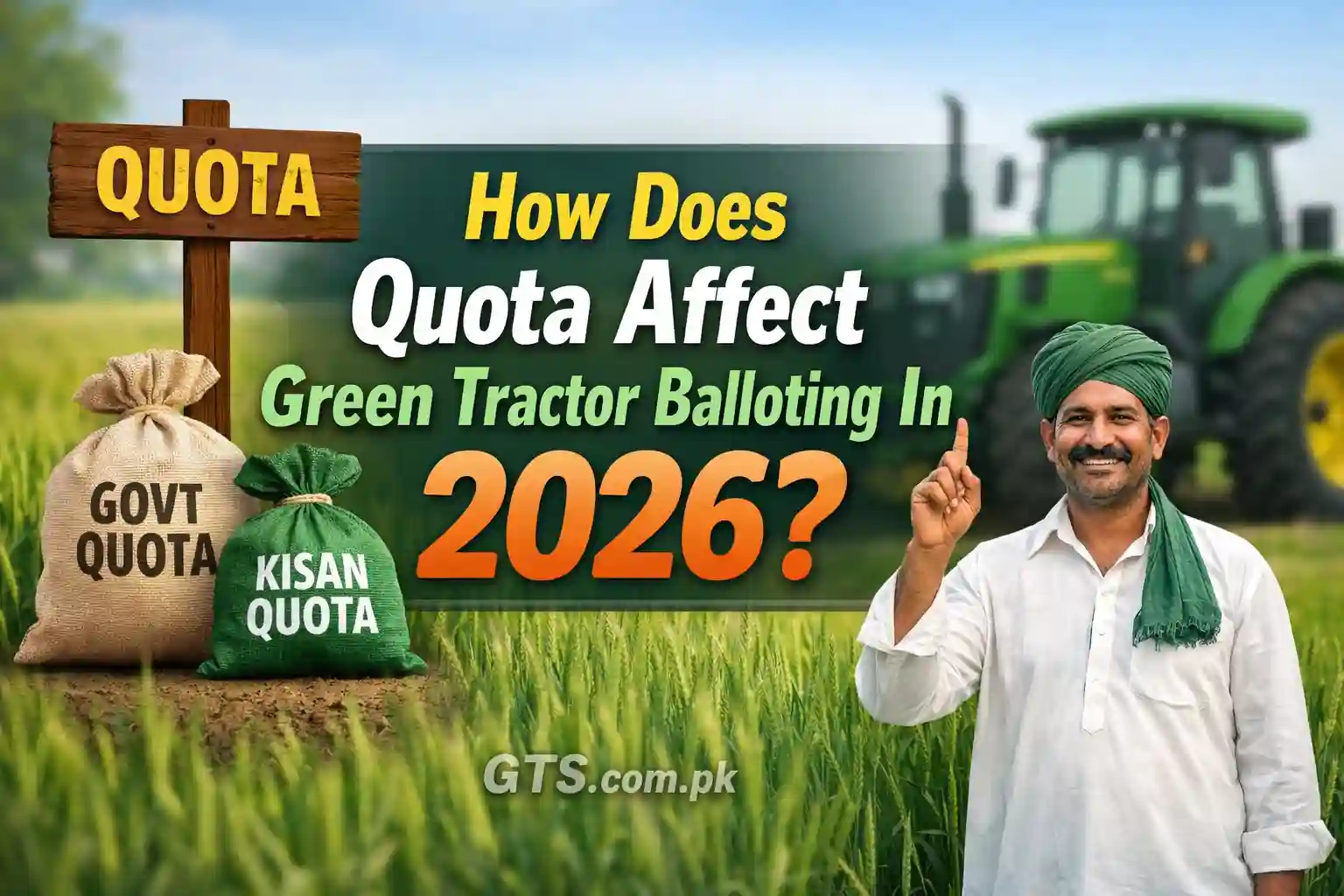
How Does Quota Affect Green Tractor Balloting In 2026
How Does Quota Affect Green Tractor Balloting is one of the most important questions farmers are asking as the 2026 selection cycle approaches, especially with growing demand and limited availability.
Understanding the Green Tractor Balloting System
The Green Tractor Balloting program was created to support small and medium farmers by making tractors more affordable through a structured and transparent selection process. Instead of first-come, first-served distribution, applicants are selected through a fair balloting method that considers multiple factors such as region, landholding size, and quota limits.
At the center of this system is quota allocation. Quotas are not random. They are designed to ensure equal opportunity across districts and prevent all tractors from being allocated to a single area or group.
This is where confusion often begins. Many farmers assume balloting is purely luck-based. In reality, quota rules heavily influence who gets selected and when.
How Does Quota Affect Green Tractor Balloting
How Does Quota Affect Green Tractor Balloting depends on how seats are distributed across regions, phases, and applicant categories. Quota acts as a filter before balloting even begins.
Each district receives a fixed number of seats based on:
- Number of registered farmers
- Agricultural activity level
- Policy priorities set for that year
This means applicants are first grouped within their district quota pool. Balloting then happens inside that limited pool, not across the entire province.
As a result, a farmer in a district with fewer applicants but a reasonable quota may have a higher chance than a farmer in a heavily populated district with the same number of tractors.
Why Quotas Exist in the First Place
Quotas are introduced to maintain balance and fairness. Without them, regions with better internet access, higher awareness, or stronger networks could dominate the selection process.
The quota system ensures:
- Equal regional representation
- Support for underdeveloped districts
- Controlled distribution aligned with budget limits
This approach also helps authorities manage logistics, tractor delivery schedules, and subsidy disbursement more efficiently.
District-Level Allocation Explained
One of the most impactful elements is the GTS District Quota. Each district is assigned a specific number of tractors before applications are reviewed.
Here is how district allocation typically works:
| Factor Considered | Impact on Quota |
|---|---|
| Total farmers registered | Higher registrations may increase quota |
| Cultivated land area | Larger agricultural zones receive priority |
| Past participation | Low past allocation may increase current quota |
| Regional balance goals | Ensures province-wide fairness |
Because of this structure, farmers are not competing with the entire province. They are competing only within their district’s assigned seats.

The Role of the Punjab Tractor Scheme
The Punjab Tractor Scheme sets the foundation for all rules related to quota and balloting. It defines eligibility, subsidy limits, and annual distribution targets.
Under this scheme:
- Priority is often given to small landholders
- Special consideration may apply to certain crop zones
- Quotas may change annually based on policy goals
These adjustments mean that quota impact in 2026 may not be identical to previous years, even if the application process looks similar on the surface.
How Farmer Allocation Works Step by Step
How Does Quota Affect Green Tractor Balloting becomes clearer when you understand Farmer Allocation from start to finish.
The process usually follows these steps:
- Applications are collected and verified
- Eligible farmers are grouped by district
- Quotas are applied to each district
- Balloting is conducted within each group
- Selected farmers are announced phase-wise
Only verified and eligible farmers are included in the balloting pool. Quota limits the number of winners, not the number of applicants.
Phase-Based Distribution and Its Impact
The tractor distribution is often divided into phases, especially when demand is high. Phase 3 Seats are particularly important because they usually accommodate applicants who were not selected earlier.
Phase-based allocation helps:
- Adjust quotas based on remaining budget
- Include additional districts if resources allow
- Correct imbalances from earlier phases
However, fewer seats in later phases can also mean tougher competition within the same quota pool.
Balloting Rules You Must Understand
Clear Balloting Rules are essential for transparency and trust. These rules ensure that once quotas are set, no manual interference affects the outcome.
Common rules include:
- Computerized random selection
- No preference after eligibility approval
- One application per farmer
- Strict verification before final approval
Breaking any rule, even unintentionally, can disqualify an applicant before balloting begins.
Selection System vs Common Myths
Many farmers misunderstand the Selection System and believe personal connections influence results. In reality, quota-based balloting limits human involvement after verification.
Here is a simple comparison to clear confusion:
| Myth | Reality |
|---|---|
| Everyone competes equally | Competition is within district quotas |
| More land guarantees selection | Eligibility does not equal selection |
| Early application improves chances | Timing does not affect balloting |
| Later phases are unfair | Phases depend on remaining seats |
Understanding these realities helps farmers set realistic expectations.
Policy Changes to Watch in 2026
The GTS Policy for 2026 is expected to refine quota distribution further. Possible changes may include:
- Revised district quotas based on updated data
- Greater focus on small-scale farmers
- Improved digital verification systems
These changes aim to make the system more efficient and reduce complaints related to unfair distribution.
How Does Quota Affect Green Tractor Balloting for Small Farmers
How Does Quota Affect Green Tractor Balloting matters most for small farmers with limited land. Quotas can either work in their favor or make competition tougher, depending on district allocation.
In districts where small farmers form the majority, quotas often increase their chances. In mixed districts, competition may be higher, but policy priorities can still tilt odds toward smaller landholders.
Practical Tips to Improve Your Chances
While quota cannot be changed by the applicant, farmers can still improve their position by:
- Ensuring accurate land records
- Applying only if fully eligible
- Monitoring phase announcements
- Keeping documents updated
Errors during verification can remove an applicant from the quota pool entirely.
Frequently Asked Questions
Does quota guarantee selection?
No. Quota limits the number of available seats, but selection still depends on balloting within that quota.
Can quotas change after applications are submitted?
Yes. Authorities may revise quotas before final balloting based on verified data.
Are later phases harder to get selected in?
Often yes, because fewer seats remain, but district-level quotas still apply.
Is quota applied before or after verification?
Quota is applied only after eligibility verification is complete.
Final Thoughts on Quota and Balloting
Understanding How Does Quota Affect Green Tractor Balloting helps farmers move from assumptions to informed decisions. Quota is not a barrier; it is a balancing tool designed to distribute limited resources fairly across regions.
When farmers understand how quotas, phases, and balloting rules work together, they are better prepared, less frustrated, and more confident in the process. Staying informed and eligible remains the best strategy in the 2026 cycle.