Tractor Subsidy Approval Process In Punjab Green Tractor Scheme Phase 3 2026
Tractor Subsidy Approval Process is the backbone of how thousands of farmers across Punjab are being selected, verified, and rewarded under the most ambitious tractor support program the province has ever launched.
Tractor Subsidy Approval Process In Punjab Green Tractor Scheme Phase 3 2026
The Punjab government has taken a bold step to strengthen agriculture by launching Phase 3 of the CM Punjab Green Tractor Scheme, a project designed to put modern tractors into the hands of real farmers who need them the most. With rising fuel costs, growing land pressures, and increasing demand for food security, this program is not just a subsidy — it is a lifeline for small and medium landholders.
This phase is bigger, smarter, and more transparent than ever before. The entire system now runs through digital verification, cross-checking of land records, and a carefully designed approval mechanism that ensures fairness. Farmers are no longer dependent on political connections or middlemen. Everything is based on data, eligibility, and proper documentation.
In this article, you will learn how approvals work, how payments are processed, how tractors are delivered, and what makes a farmer eligible. You will also understand how Punjab Government Tractor Distribution is now faster and more secure than in previous years.

Understanding the Punjab Green Tractor Scheme Phase 3
The GTS Phase 3 2026 has been developed after learning from the first two phases. Earlier versions helped thousands of farmers, but they also exposed loopholes, delays, and verification problems. Phase 3 focuses on digital governance, transparency, and speed.
Under this phase, eligible farmers receive a heavy subsidy on approved tractor models. Instead of cash payments, the government directly coordinates with tractor manufacturers and dealerships, which removes the risk of misuse.
The scheme aims to:
- Increase crop productivity
- Reduce manual labor
- Improve irrigation and plowing efficiency
- Support rural incomes
More than 50,000 tractors are expected to be distributed during this phase alone, making it one of the largest agricultural equipment subsidy programs in South Asia.

How the Application System Works
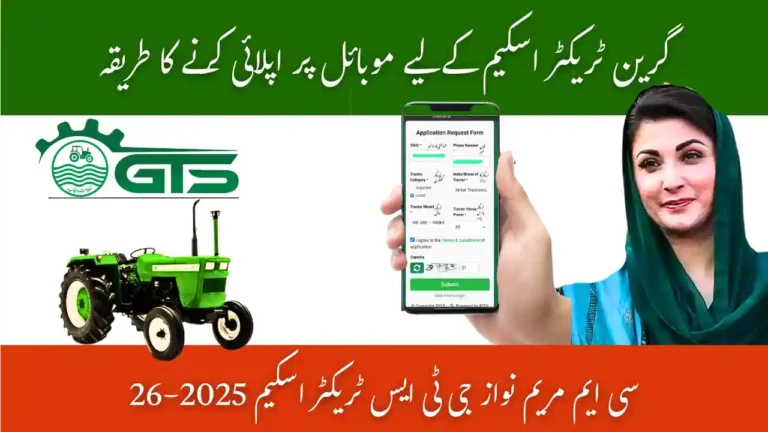
Every farmer begins by submitting an online or offline application. The form collects:
- CNIC
- Land ownership or tenancy documents
- Crop details
- District and tehsil information
- Mobile number for verification
Once submitted, the application is stored in the central agriculture database. This is where the real filtering begins.
The government links this data with:
- Punjab Land Record Authority
- NADRA identity system
- Agriculture extension offices
This allows the system to automatically reject duplicate entries, fake land claims, or ineligible applicants. Only farmers who pass this first digital filter move forward.
This is the first stage of the Tractor Subsidy Approval Process.

Digital Verification and Land Record Matching
In Phase 3, land verification is no longer manual. The system checks:
- Total cultivated land
- Ownership or lease validity
- Previous subsidy history
Farmers who already received a tractor in earlier phases are excluded to ensure wider coverage.
This digital matching reduces corruption and favoritism. It also speeds up processing because most cases are cleared within days instead of months.
After land verification, the applicant becomes a provisional Punjab Tractor Scheme Beneficiary.

Physical Verification by Field Officers
Even though digital systems do most of the work, physical verification is still critical. Agriculture department officers visit selected applicants to confirm:
- Land exists
- Crops are being grown
- Applicant is actively farming
They upload photos, GPS coordinates, and inspection reports into the central system. This step protects the program from fraud and ensures only real farmers get tractors.
This stage is another essential layer of the Tractor Subsidy Approval Process, making sure the system is not just fast, but also fair.
Approval Committee and Final Selection
Once both digital and physical verification are complete, applications go to the district approval committee. This committee includes:
- Agriculture officers
- Revenue officials
- Government representatives
They review:
- Verification reports
- Eligibility criteria
- Available tractor quota
Only after committee approval does a farmer receive a final confirmation message.
At this point, the farmer officially becomes part of the CM Punjab Green Tractor Scheme Phase 3.
How Subsidy Payments Are Handled
Unlike cash-based schemes, this program uses a controlled payment model. The farmer does not receive money directly. Instead, the government pays the subsidy portion to the tractor company.
The farmer only pays their own share at an authorized dealership. This ensures:
- No cash misuse
- No black-market resale
- Full traceability
This system is called Punjab Tractor Subsidy Payment and it is one of the strongest anti-corruption features of the program.
Tractor Models and Subsidy Breakdown
The government has approved several tractor models based on fuel efficiency, durability, and maintenance costs.
| Tractor Category | Engine Power | Market Price | Government Subsidy | Farmer Pays |
|---|---|---|---|---|
| Small Tractor | 50–60 HP | PKR 2,800,000 | PKR 1,000,000 | PKR 1,800,000 |
| Medium Tractor | 60–75 HP | PKR 3,500,000 | PKR 1,200,000 | PKR 2,300,000 |
| Large Tractor | 75+ HP | PKR 4,200,000 | PKR 1,500,000 | PKR 2,700,000 |
This transparent pricing system makes it easier for farmers to choose the right machine for their land size.
Green Tractor Delivery Process Explained
Once the farmer has paid their share, the dealership requests the tractor from the manufacturer. The government releases the subsidy portion directly to the supplier.
The Green Tractor Delivery Process usually follows this timeline:
- Payment confirmation
- Dealer order
- Manufacturer dispatch
- Dealer delivery
- Farmer pickup
Most farmers receive their tractor within 20 to 30 days of final payment.
Why Phase 3 Is More Reliable Than Before
The third phase has introduced:
- Real-time tracking
- Mobile SMS alerts
- Online status portals
- Complaint redress systems
These upgrades mean farmers are always informed and can report delays or issues.
The improved Tractor Subsidy Approval Process now works like a modern financial system instead of a slow government office.
Who Can Apply in Phase 3
Eligibility is strictly based on:
- Being a resident of Punjab
- Owning or leasing 1–50 acres
- Not having received a tractor before
- Actively farming
Priority is given to small farmers to maximize social and economic impact.
Impact on Punjab’s Agriculture
Thousands of tractors already delivered have:
- Reduced cultivation time
- Increased crop yield
- Improved soil management
- Created rural employment
The Punjab Government Tractor Distribution program is not just about machines — it is about long-term food security.
Common Mistakes That Delay Approval
Many farmers lose time because of:
- Incorrect CNIC
- Fake land documents
- Multiple applications
- Missing contact details
Avoiding these mistakes speeds up your case in the Tractor Subsidy Approval Process.
Key Benefits for Farmers
| Benefit | Result |
|---|---|
| Lower costs | Less manual labor |
| Faster farming | Timely sowing |
| Better yield | Improved plowing |
| Income growth | Higher productivity |
This is why demand for GTS Phase 3 2026 has been record-breaking.
Frequently Asked Questions
1. How long does approval take?
Most applications are approved within 3 to 6 weeks if documents are correct.
2. Can tenants apply?
Yes, if they have valid lease documents.
3. Can I choose any tractor brand?
Only government-approved brands and models are allowed.
4. What if my application is rejected?
You can appeal or reapply with corrected information.
5. Is there any middleman involved?
No. The system is fully government-controlled and digital.
Final Thoughts
The Tractor Subsidy Approval Process under Phase 3 of the Punjab Green Tractor Scheme represents a major step forward for transparent and farmer-focused governance. By combining digital verification, physical inspections, controlled payments, and direct manufacturer delivery, the government has built a system that actually works for the people who grow our food.