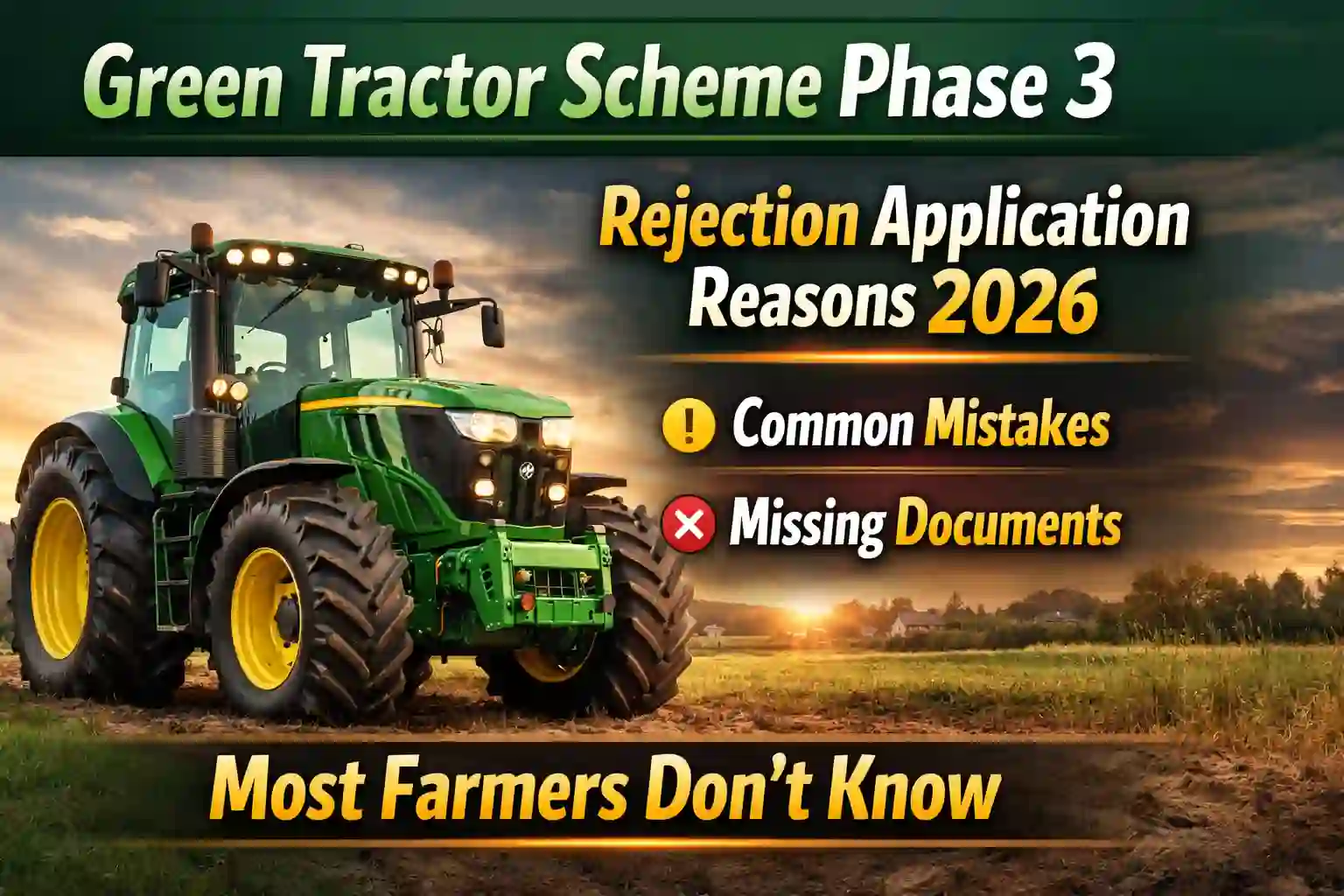
Green Tractor Scheme Phase 3 Rejection Application Reasons 2026: Most Farmers Don’t Know
Green Tractor Scheme Phase 3 Rejection Application Reasons are becoming a serious concern for many farmers who applied with high hopes but received disappointing rejection messages.
Introduction: Why So Many Farmers Are Confused After Rejection
The CM Punjab Green Tractor Scheme Phase 3 was launched to support farmers by offering subsidized tractors and helping modernize agriculture. Thousands of farmers applied, believing they met all the requirements. However, a large number of applications were rejected without clear explanations.
Many farmers assume rejection only happens due to lack of eligibility, but in reality, the reasons are often more technical and hidden. Small mistakes, missing details, or system mismatches can easily lead to rejection, even if the farmer genuinely qualifies.
This article explains the real and lesser-known causes behind application rejections. By understanding these points, farmers can avoid repeating the same mistakes in future phases and increase their chances of approval.

Understanding Green Tractor Scheme Phase 3 Rejection Application Reasons
Many applicants never receive a detailed explanation for rejection. The system automatically checks multiple records and data sources, and even a minor mismatch can result in disqualification.
Below, we break down the most critical and often ignored factors that lead to rejection, explained in simple language.
Incomplete or Incorrect Application Details
One of the most common application rejection reasons is incomplete or incorrect information in the form.
Farmers often rush through the application process and overlook small but crucial details. These errors may seem minor but can instantly flag the application.
Common Data Entry Mistakes
- Spelling errors in names
- Incorrect father’s name
- Wrong mobile number
- Invalid address details
Even one incorrect letter can cause the system to fail verification checks.
Why Accuracy Matters
The application system cross-checks data with NADRA and land record databases. If the information does not match exactly, the application is rejected automatically without manual review.

CNIC Verification Problems That Farmers Ignore
CNIC problems are another major reason why applications fail silently.
Many farmers believe that having a CNIC is enough, but the system requires more than that.
Common CNIC-Related Issues
- Expired CNIC
- CNIC not linked to an active mobile SIM
- CNIC marked inactive in NADRA records
- Family registration issues
If the CNIC cannot be verified digitally, the application is rejected instantly.
How to Prevent CNIC Rejection
Farmers should always ensure their CNIC is valid, active, and correctly registered before applying. Updating records at NADRA can prevent unnecessary rejection.

Land Ownership and Record Verification Issues
One of the most misunderstood eligibility issues relates to land records.
Many farmers own land but still get rejected due to outdated or incorrect documentation.
Major Land Record Issues
- Land not digitized in official records
- Ownership under a deceased person’s name
- Shared or disputed land titles
- Incorrect acreage information
The system only accepts verified digital land records, and manual claims are not considered.
Table 1: Common Land Record Problems and Their Impact
| Land Issue Type | Why It Causes Rejection | How to Fix It |
|---|---|---|
| Undigitized land | System cannot verify ownership | Visit land record center |
| Shared ownership | Ownership percentage unclear | Update mutation |
| Old ownership name | Data mismatch | Transfer title legally |
| Wrong acreage | Eligibility mismatch | Correct land details |
Previous Scheme Participation Conflicts
Some farmers are unaware that participation in earlier government schemes can affect eligibility.
How This Happens
- Farmers who already received benefits in previous tractor schemes
- Applicants listed as beneficiaries in related subsidy programs
- Duplicate applications within the family
These conflicts are flagged automatically and result in subsidy rejection.
Mistakes in Tractor Selection and Specifications
Not all tractors listed under the scheme are available in every district. Choosing the wrong model can also lead to rejection.
Common Tractor Scheme Mistakes
- Selecting an unavailable brand
- Choosing incorrect horsepower range
- Ignoring district-wise allocation limits
The system rejects applications that do not match regional availability.
Bank Account and Financial Verification Issues
Financial details play a bigger role than many farmers realize.
Common Problems
- Bank account not in applicant’s name
- Inactive or dormant account
- Incorrect IBAN entry
- Account linked to another subsidy
These financial mismatches are among the hidden application rejection reasons that farmers rarely check.
Table 2: Financial Errors That Lead to Rejection
| Financial Issue | Result | Prevention Tip |
|---|---|---|
| Wrong IBAN | Payment failure | Double-check IBAN |
| Joint account | Ownership unclear | Use personal account |
| Dormant account | Verification fails | Activate account |
| Subsidy overlap | Disqualification | Review subsidy history |
System Load and Technical Errors
During peak application days, system overload can cause incomplete submissions.
What Farmers Don’t Know
- Forms may appear submitted but remain incomplete
- Uploaded documents may not save properly
- OTP verification may fail silently
These technical problems can trigger Green Tractor Scheme Phase 3 Rejection Application Reasons even when all information seems correct.
Lack of Awareness About Eligibility Updates
Eligibility criteria may change slightly between phases, but many farmers rely on old information.
Examples of Changed Rules
- Minimum land requirement adjustments
- Age limit updates
- Priority district inclusion or exclusion
Failing to meet updated criteria leads to rejection under eligibility issues.
How to Avoid Rejection in Future Phases
Understanding mistakes is only helpful if farmers take corrective action.
Practical Steps
- Verify CNIC and mobile linkage before applying
- Update land records digitally
- Recheck eligibility criteria for the current phase
- Use a personal, active bank account
- Review application details carefully before submission
By following these steps, farmers can significantly reduce Green Tractor Scheme Phase 3 Rejection Application Reasons in future applications.
Frequently Asked Questions (FAQs)
1. Can I reapply if my application was rejected?
Yes, farmers can reapply in future phases after correcting the reasons that caused rejection.
2. Does land on lease qualify for the scheme?
In most cases, leased land does not qualify unless officially registered under the applicant’s name.
3. How do I check if my CNIC is causing rejection?
Visit NADRA or use official SMS verification services to confirm CNIC status.
4. Is joint land ownership acceptable?
Joint ownership often leads to rejection unless ownership shares are clearly defined and digitized.
5. Can technical errors be corrected after submission?
No, once submitted, errors cannot be corrected. A fresh application is required in the next phase.
Conclusion: Learn From Rejection and Apply Smarter
Rejection does not mean ineligibility. In many cases, Green Tractor Scheme Phase 3 Rejection Application Reasons are linked to small technical issues, outdated records, or overlooked details rather than a lack of qualification.
By understanding these hidden problems, farmers can prepare better, update their documents, and apply confidently in future phases. Careful preparation, accurate data, and awareness of updated rules can make the difference between rejection and approval.