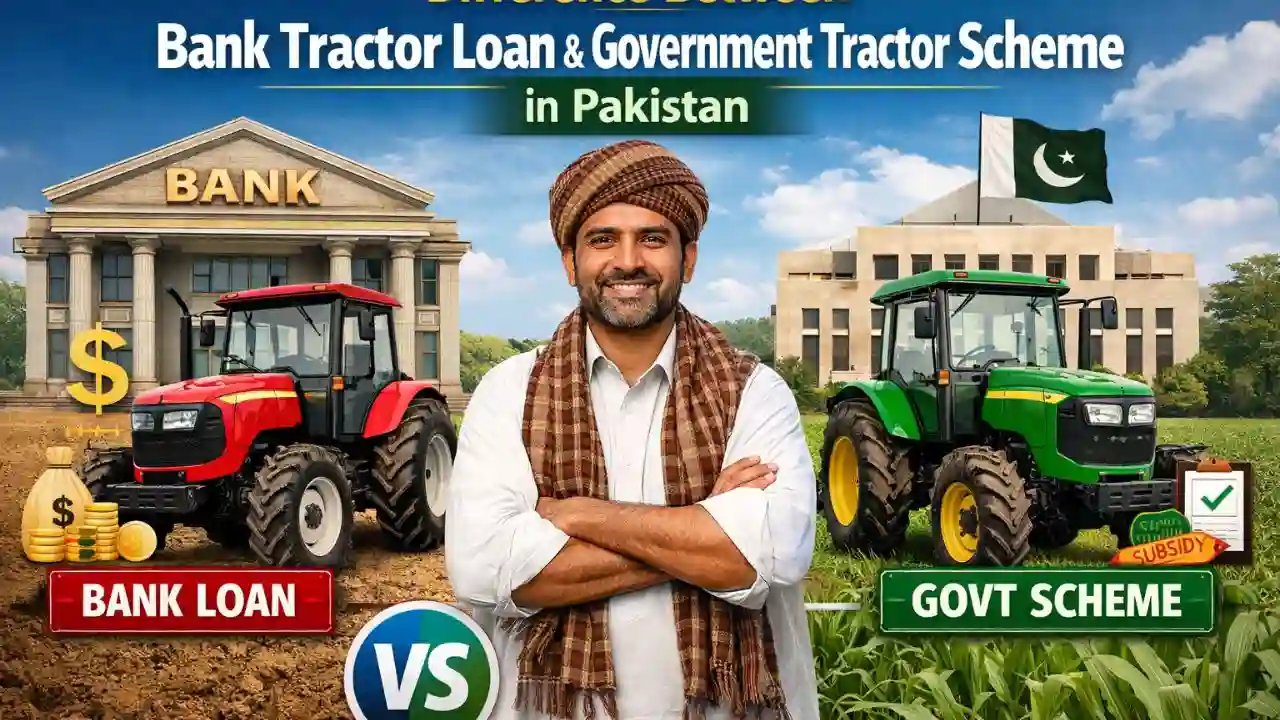
Difference Between Bank Tractor Loan & Government Tractor Scheme 2026
Difference Between Bank Tractor Loan & Government Tractor Scheme 2026 has become essential for improving agricultural productivity in Pakistan. Tractors play a central role in land preparation, sowing, harvesting, and transportation. However, due to high tractor prices, most farmers cannot afford to purchase one outright. To address this challenge, two major financing options are available: Bank Tractor Loans and Government Tractor Schemes.
Although both aim to help farmers acquire tractors, their structure, eligibility, benefits, and long-term impact are very different. This detailed guide explains the difference between bank tractor loans and government tractor schemes, helping farmers choose the option best suited to their needs.
What Is a Bank Tractor Loan?
A Bank Tractor Loan is a commercial financing facility offered by banks to farmers for purchasing tractors. These loans operate under standard banking rules and are available throughout the year.
Banks such as ZTBL, National Bank, UBL, HBL, Meezan Bank, and other commercial or Islamic banks offer tractor financing under both conventional and Islamic modes.
Key Features of Bank Tractor Loans
- Offered by public and private banks
- Available for new and used tractors (in some cases)
- Requires repayment in monthly or quarterly installments
- Includes interest or profit markup
- Open throughout the year
Bank tractor loans are widely used by medium- and large-scale farmers who need immediate access to machinery.
What Is a Government Tractor Scheme?
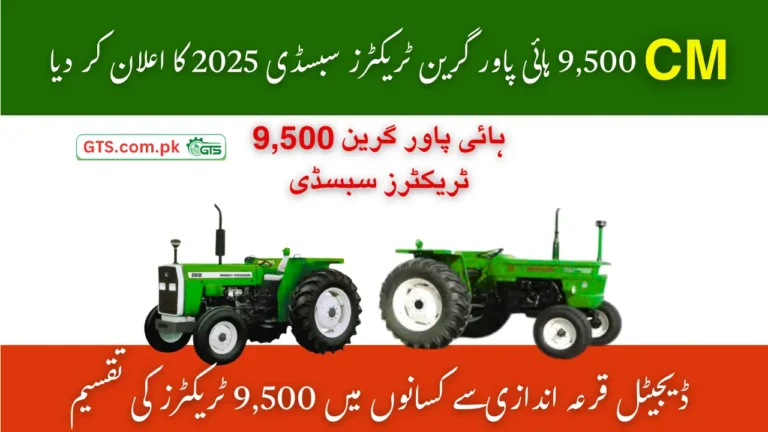
A Government Tractor Scheme is a subsidy-based initiative launched by federal or provincial governments to support small and medium farmers. These schemes are usually introduced under agricultural development programs.
Popular examples include Punjab Green Tractor Scheme, Prime Minister’s Tractor Scheme, and provincial subsidy programs.
Key Features of Government Tractor Schemes
- Launched for a limited period
- Offer heavy subsidies or discounted prices
- Selection often through balloting
- Focused on small and marginal farmers
- Limited number of tractors
Government schemes aim to promote equity and boost agricultural output rather than generate profit.
Eligibility Criteria: Bank Loan vs Government Scheme
Bank Tractor Loan Eligibility
Banks follow strict eligibility rules, including:
- Valid CNIC
- Proof of land ownership or lease
- Bank account and credit history
- Down payment (usually 20–30%)
- Age and income verification
Farmers with clear financial records and assets have higher chances of approval.
Government Tractor Scheme Eligibility
Government schemes usually have simpler but stricter social criteria:
- Small or medium landholding limits
- Residency or domicile of a specific province
- One tractor per family rule
- No previous benefit from similar schemes
- Registration through official portals
Eligibility depends more on land size and fairness rather than financial strength.
Cost Difference Between Bank Tractor Loan & Government Tractor Scheme
Cost Under Bank Tractor Loan
Under a bank loan:
- Farmer pays full tractor price
- Additional interest or profit markup applies
- Total cost increases over time
- Insurance and processing charges included
While flexible, bank loans often result in higher overall expenses.
Cost Under Government Tractor Scheme
Under government schemes:
- Tractor price is subsidized
- Government pays part of the cost
- No interest on subsidy portion
- Lower financial burden on farmers
In many cases, farmers pay 30–50% less than market price.
Down Payment Comparison
Bank Tractor Loan Down Payment
Banks require:
- 20% to 30% upfront payment
- Immediate payment before loan approval
- Additional documentation fees
This can be difficult for small farmers with limited savings.
Government Tractor Scheme Down Payment
Government schemes usually require:
- Minimal down payment
- Fixed subsidized amount
- Sometimes installment options without markup
This makes government schemes more accessible to low-income farmers.
Interest and Markup Structure
Bank Tractor Loan Interest
- Conventional loans include interest
- Islamic banks use Murabaha or Ijarah
- Markup rates vary with policy rate
- Long-term repayment increases cost
Interest rates can change, increasing uncertainty.
Government Tractor Scheme Interest
- No interest on subsidy
- Fixed payment structure
- Government absorbs financial burden
- Transparent pricing
This is one of the biggest advantages of government schemes.
Repayment Period Comparison
Bank Tractor Loan Repayment
- Flexible tenure (3 to 7 years)
- Monthly or quarterly installments
- Penalties for late payment
- Tractor may be repossessed on default
Loans provide flexibility but carry risk.
Government Tractor Scheme Repayment
- Shorter and fixed repayment schedules
- Often installment-free subsidy
- No harsh penalties
- Tractor ownership usually secure
Government schemes are farmer-friendly in repayment terms.
Availability and Access
Bank Tractor Loan Availability
- Available year-round
- No quota limitations
- Faster processing if documents complete
- Can choose tractor brand freely
Ideal for farmers needing urgent machinery.
Government Tractor Scheme Availability
- Announced occasionally
- Limited number of tractors
- High competition
- Long waiting periods
Many eligible farmers may not be selected due to limited quotas.
Transparency and Selection Process
Bank Tractor Loan Process
- Clear banking procedures
- Approval based on creditworthiness
- No balloting or lottery
- Predictable outcome
If requirements are met, approval is likely.
Government Tractor Scheme Process
- Application through government portals
- Selection via computerized balloting
- Political and administrative oversight
- Results not guaranteed
Even eligible farmers may not be selected.
Ownership and Control
Ownership Under Bank Loan
- Tractor remains mortgaged to bank
- Ownership transferred after full payment
- Bank has legal control during loan period
Ownership Under Government Scheme
- Tractor usually registered in farmer’s name
- Fewer legal restrictions
- Government monitoring limited
This gives farmers more confidence and control.
Suitability: Which Option Is Better for Whom?
Bank Tractor Loan Is Best For:
- Medium to large farmers
- Farmers with strong financial records
- Those needing immediate tractor purchase
- Farmers wanting brand flexibility
Government Tractor Scheme Is Best For:
- Small and marginal farmers
- Low-income households
- First-time tractor buyers
- Farmers who can wait for scheme launch
Choosing the right option depends on financial capacity and urgency.
Impact on Agricultural Growth
Bank tractor loans support commercial farming expansion, while government tractor schemes promote inclusive agricultural development. Together, both systems play a vital role in modernizing Pakistan’s agriculture sector.
Final Conclusion
The difference between bank tractor loans and government tractor schemes lies in cost, accessibility, risk, and long-term financial impact. Bank loans offer flexibility and availability but come with higher costs and financial pressure. Government schemes provide affordability and relief but are limited and competitive.
Farmers should assess their land size, income level, urgency, and repayment capacity before choosing. An informed decision can significantly improve farm productivity without causing financial stress.
FAQs Difference Between Bank Tractor Loan
1. Which is cheaper: bank tractor loan or government tractor scheme?
Government tractor schemes are cheaper due to subsidies and no interest.
2. Can a farmer apply for both options?
Yes, but eligibility and approval depend on scheme rules and bank policies.
3. Do bank tractor loans require collateral?
Yes, usually land or the tractor itself is used as security.
4. Are government tractor schemes available every year?
No, they are announced occasionally based on government policy and budget.
5. Which option is safer for small farmers?
Government tractor schemes are safer due to lower financial risk.