
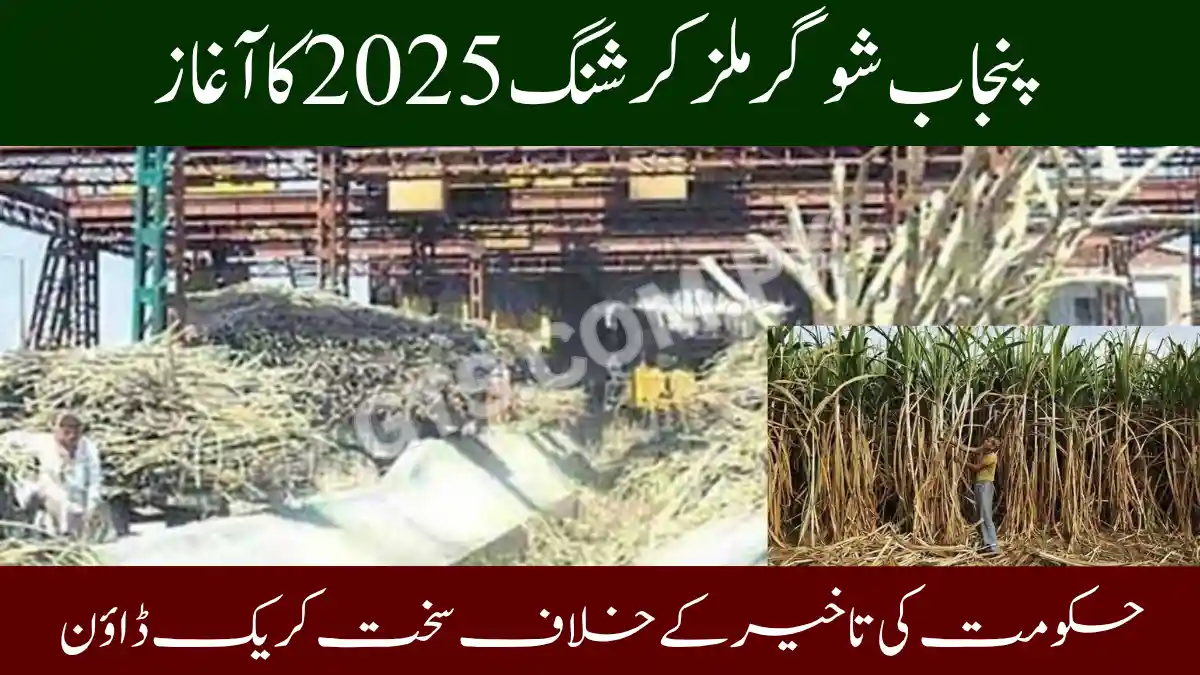
Punjab Sugar Mills Crushing 2025 Begins as Govt Cracks Down on Delays
The much-anticipated Punjab Sugar Mills Crushing 2025 season has officially begun as the provincial government intensifies its pressure on mills to start operations without further delay. The move comes at a crucial time when farmers are seeking timely payments, consumers are hoping for price stability, and policymakers are focusing on reshaping the country’s sugar sector for long-term sustainability.
By the end of the week, nearly 27 out of 41 mills in Punjab had already resumed crushing. Officials say the remaining mills have been instructed to start immediately, or they may face regulatory consequences. This marks one of the most assertive administrative actions in recent years, signaling that the Punjab government wants to avoid any disruption in the sugarcane supply chain.
The restart is particularly significant because the crushing season affects millions of lives — from small farmers who depend on timely cane procurement to consumers worried about rising sugar prices. This makes the early launch of Punjab Sugar Mills Crushing 2025 a key factor in balancing both market stability and production efficiency.
Government Push Forces Early Start
According to senior officials, the administration firmly believes that the best way to prevent artificial shortages and price manipulation is by ensuring the crushing season starts on time. The government has already issued multiple notices to mills that have been delaying operations, warning them of strict action.
This aligns with concerns highlighted in Punjab sugar mills news 2025, where authorities repeatedly emphasized the importance of a smooth crushing season. The provincial leadership stated that late crushing directly harms farmers who rely on timely cane payments to manage their household expenses, buy agricultural inputs, and prepare for the next crop cycle.
Moreover, delayed crushing can cause a ripple effect across the broader supply chain. When mills start late, the production cycle shifts, impacting both stock availability and market behavior. By pushing mills to begin operations promptly, the government hopes to maintain the supply flow, avoid panic buying, and prevent price hikes.
Also Check: Government Update: Sindh Wheat Support Program Receives 320,000 Farmer Applications

Legal Resistance From a Section of Mills
Despite the strong administrative stance, not all mills have cooperated willingly. A group of mills approached the Lahore High Court, seeking relief from what they deemed an “unrealistic timeline.” The court granted a temporary stay order, restricting the government from taking immediate action against them.
Industry representatives argue that the ground realities vary from mill to mill. Cane availability, harvesting schedules, financial constraints, and technical readiness all impact when a mill can realistically begin operations.
Even so, mills not covered by the stay order are under pressure to comply. According to court-focused reports, government teams have been monitoring those still resisting, ensuring the early start remains on track for the broader sugar crushing season Punjab.

Federal Deregulation Plan Adds Another Layer
While Punjab deals with early crushing, the federal government is working on a sweeping policy reform for the sugar industry. A committee led by the Federal Minister for Food Security has finalized recommendations for full deregulation — a move welcomed by several industry leaders.
The proposed deregulation includes:
- Removing restrictions on establishing new mills
- Ending import and export quota systems
- Allowing prices to be determined purely by market forces
- Ending decades of tight government oversight
If approved, this will be one of the most significant reforms in Pakistan’s sugar sector, impacting farmers, exporters, mills, and consumers.
Industry members believe deregulation will encourage modernization, expand export potential, and increase competition — themes highlighted strongly in the Punjab sugar industry latest update shared by different stakeholders.
Also Check: Farmers Get Big Relief: Khushhali Bank Solar Tube Well Loan Up to Rs. 30 Lakh Announced

Industry and Farmers Respond
Reactions across the industry have been mixed. Many established mills support deregulation, saying it will eliminate artificial market controls and encourage investment. One senior mill owner noted that Pakistan must move toward international competitiveness instead of relying on outdated laws and restrictions.
However, some farmers fear deregulation could initially shift market power toward mill owners. They argue that without strong oversight, mills could dictate cane prices. Yet agricultural experts counter this by saying that modern cultivation techniques, improved yields, and open-market competition will eventually benefit both farmers and mills.
A senior dealer with extensive experience in farming and trading explained that new technologies and private investment could help reduce production costs while making Pakistan a competitive sugar exporter. This aligns with ongoing conversations about sugar sector regulation Pakistan, where policymakers are trying to strike a balance between market freedom and necessary protections.

Why Early Crushing Matters This Year
Several factors make early crushing more important in 2025 than in previous years:
- High retail sugar prices have created public pressure for price stability.
- Farmers were experiencing payment delays, which early crushing may help resolve.
- Global sugar markets are unstable, and Pakistan needs domestic stability to avoid fluctuations.
- Crushing delays can impact exports, particularly in a year when Pakistan is considering opening its sugar export window again.
The government believes that early crushing, combined with possible deregulation, could stabilize the local market while positioning Pakistan to compete globally.
Outlook for the Rest of the Season
As most mills resume operations, analysts expect a more stable supply of sugar across the province. However, legal challenges and deregulation debates mean the sector is still undergoing major transformation.
The next few weeks will determine whether all mills eventually comply, how the legal proceedings unfold, and whether federal deregulation proceeds smoothly. For now, officials remain hopeful that early crushing will:
- Support farmers
- Improve market stability
- Prevent artificial shortages
- Reduce the chances of price manipulation
With the start of Punjab Sugar Mills Crushing 2025, the province has set the stage for what could become a landmark year for Pakistan’s sugar sector.
Also Check: Green Tractor Scheme Jhelum – 39 Farmers Receive New Tractors with Rs. 10 Lakh Subsidy
Punjab Sugar Mills Crushing 2025 Conclusion
The start of Punjab Sugar Mills Crushing 2025 marks a critical turning point for the province’s sugar economy, bringing government enforcement, industry challenges, and major policy reforms into sharp focus. With most mills now operational, the government aims to stabilize supply, support farmers with timely payments, and prevent the price manipulation that commonly occurs during delayed crushing seasons.
At the same time, the ongoing legal battles and the federal government’s push for complete deregulation are reshaping the national sugar landscape in ways that could define the sector’s future for decades. If these reforms move forward, Pakistan’s sugar industry may finally transition from heavy state control to a more competitive, market-driven environment.
For now, the early launch of Punjab Sugar Mills Crushing 2025 offers cautious optimism. Timely crushing is expected to bring smoother cane procurement, fewer market shocks, and better price stability — but the true outcome will depend on how the legal, administrative, and policy shifts unfold in the weeks ahead.