Punjab Tractor Scheme Result 2026 – Hi Power Tractor Balloting Winners
The Punjab Tractor Scheme Result 2026 is expected to mark another major milestone for farmers across Punjab, as the government continues its commitment to agricultural mechanization through transparent and subsidized tractor distribution. Thousands of farmers are once again waiting for the official computerized balloting results, which are expected to decide the successful applicants under the latest phase of the scheme. This initiative reflects the Punjab Government’s ongoing vision to modernize agriculture by supporting both small and medium farmers with affordable access to modern machinery.
Punjab remains the agricultural backbone of Pakistan, producing essential crops such as wheat, rice, sugarcane, cotton, and vegetables for the entire country. Despite this central role, access to tractors and modern equipment has long remained a challenge, especially for farmers with limited financial resources. Purchasing a tractor at full market price is still out of reach for many, which is why the Punjab Green Tractor Scheme Phase 3 (2026) is considered a critical support system for farming families.
Under Phase 3, the Punjab Government is expected to continue computerized balloting to ensure transparency and fairness in tractor allocation. Successful applicants will be able to purchase approved tractors at subsidized rates, reducing the financial burden and enabling timely farm operations. Similar to previous phases, the scheme is likely to include multiple categories of tractors, covering different horsepower ranges to meet diverse farming needs. Together with earlier phases, Phase 3 is expected to further strengthen mechanization efforts during the 2026 agricultural cycle, helping farmers improve productivity, reduce reliance on hired machinery, and secure more sustainable farming seasons ahead.
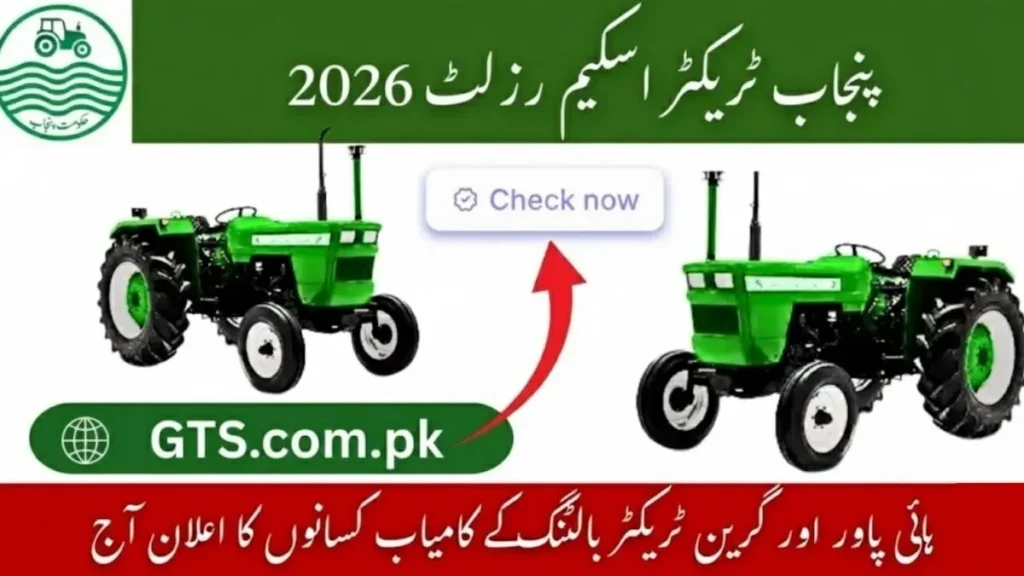
Punjab Tractor Schemes 2026 – Phase 3 Overview
The Punjab Government continues its strong focus on agricultural mechanization under Tractor Schemes Phase 3 (2026), building on the framework introduced in earlier phases. These schemes are designed to help farmers access modern tractors at subsidized rates, reduce production costs, and improve farm productivity across Punjab during the 2026 agricultural cycle.
Under the Chief Minister’s Punjab Hi Power Tractor Program (Phase 3), the government is expected to support farmers requiring heavy-duty machinery for large landholdings and commercial operations. The program is structured for the 2026 period, with an estimated target similar to earlier phases, focusing on hi-power tractors in the 75–120 HP range. The subsidy model is expected to continue on a per-tractor basis, easing the high upfront cost for eligible farmers and contractors.
Alongside this, the Chief Minister’s Punjab Green Tractor Program (Phase 3) is aimed at small and medium farmers, offering support for 50–65 HP tractors that are suitable for general farming operations. This program is designed to make tractor ownership more accessible to farmers who rely heavily on hired machinery. The subsidy under Phase 3 is expected to remain structured and policy-backed, helping farmers invest in reliable equipment without excessive financial pressure.
Overall, the combined allocation for Punjab Tractor Schemes Phase 3 (2026) reflects the government’s continued seriousness toward strengthening agriculture through mechanization. By supporting both high-power and mid-range tractor categories, the scheme aims to improve timely cultivation, reduce dependence on rentals, and ensure more stable and productive farming seasons across Punjab.government in supporting farmers.
Punjab Hi Power Tractor Program 2026
The Hi Power Tractor Program under Phase 3 (2026) is designed for medium to large farmers who require powerful machinery to manage extensive landholdings efficiently. Tractors in the 75–120 HP range are well suited for heavy-duty agricultural operations such as deep ploughing, laser land leveling, sugarcane cultivation, and wheat or rice harvesting. These tasks demand strength, stability, and consistent performance, which high-horsepower tractors are built to deliver.
Without government support, such tractors remain unaffordable for most farmers due to their high market prices. Under Phase 3, the Punjab Government’s structured subsidy model significantly reduces the financial burden, making ownership more realistic for eligible farmers. This support allows farmers to invest in durable machinery that improves output and reduces long-term operational costs.
Key Benefits of Hi Power Tractors for Farmers:
- Cover larger areas in less time
- Perform efficiently in tough and compact soil conditions
- Ideal for large-scale and commercial cash crops
- Reduce dependence on manual labor and hired machinery
- Offer long-term durability with stronger resale value
Beyond individual ownership, the program also supports collective and shared farming models, where farmer groups can jointly use tractors, improving access to modern machinery in rural areas.
Punjab Green Tractor Program – Phase 3 (2026)
The Punjab Green Tractor Program Phase 3 (2026) is specifically tailored for small and medium farmers, particularly those managing 5–25 acres of land. Tractors in the 50–65 HP category are ideal for routine agricultural operations and are widely used for crops such as wheat, cotton, rice, fodder, and vegetables. These tractors are known for their fuel efficiency, ease of maintenance, and versatility.
Through a structured subsidy approach, the government aims to ensure that small-scale farmers are not excluded from mechanization benefits. By expanding tractor access under Phase 3, Punjab continues its efforts to strengthen rural productivity and improve per-acre yield across the province.
Advantages for Small and Medium Farmers:
- More affordable tractor ownership
- Reduced reliance on rented tractors
- Timely sowing and harvesting operations
- Improved productivity and farm income
- Opportunity to earn additional income through rental services
Why the Balloting System Is Transparent and Fair (Phase 3 – 2026)
One of the strongest features of the Punjab Tractor Scheme Phase 3 (2026) is the transparency of its computerized balloting system. In earlier years, farmers often raised concerns about favoritism, political influence, or unfair selection. Learning from past feedback, the Punjab Government has designed Phase 3 with strict safeguards to ensure zero human interference in the selection process.
The computerized draw system automatically selects successful applicants, leaving no room for manual manipulation. The process is expected to be monitored by independent observers, while results are published online for public access and verification. Farmers can check their application status using their CNIC or application number, which further strengthens accountability. This transparent approach builds confidence among farmers and effectively eliminates the role of middlemen or agents.
Historical Background of Punjab Tractor Schemes
Punjab has a long history of tractor subsidy programs aimed at modernizing agriculture. Since the 1980s, various governments have introduced tractor schemes to support farmers and improve mechanization. However, many earlier initiatives faced criticism due to limited transparency, weak monitoring systems, and unclear eligibility criteria.
What sets the Punjab Tractor Scheme Phase 3 (2026) apart is its modern and structured design. Compared to older programs, Phase 3 offers:
- Clearly defined subsidy structures
- Transparent digital balloting
- Fixed targets with allocated budgets
- Coverage for both small and large farmers
- Strong use of technology for verification and monitoring
These improvements make Phase 3 one of the most ambitious and transparent agricultural support initiatives in Pakistan’s history. By combining fair selection, digital systems, and policy-backed subsidies, the scheme represents a major step forward in rebuilding farmer trust and strengthening Punjab’s agricultural future.
Hi Power vs Green Tractor – Which One Is Better? (Phase 3 – 2026)
When choosing between Hi Power Tractors and Green Tractors under Punjab Tractor Scheme Phase 3 (2026), the decision is not about which program is better overall—it is about which tractor best fits a farmer’s land size, crops, and workload. The Punjab Government has intentionally designed both schemes to serve different categories of farmers, ensuring balanced agricultural development.
Hi Power Tractors (75–120 HP) – For Large-Scale Farming
Hi Power Tractors fall under the Punjab Hi Power Tractor Program Phase 3 (2026) and are designed for medium to large farmers, especially those cultivating 50 acres or more. These tractors are built for demanding agricultural operations where strength, speed, and durability matter most.
Horsepower Range: 75–120 HP
Best Suited For: Sugarcane, wheat, cotton, rice, and large-scale commercial farming
Key Advantages:
- Handle heavy soil and tough terrain efficiently
- Ideal for deep ploughing and laser land leveling
- Reduce the need for multiple smaller tractors
- Save valuable time during peak land preparation seasons
- Offer long engine life and stable performance for large operations
Under Phase 3, structured government subsidy significantly reduces the purchase burden, making high-capacity tractors more accessible for eligible farmers.
In simple terms: Hi Power Tractors act as growth engines for large farmers who need high productivity, speed, and reliability with minimal operational delays.
Green Tractors (50–65 HP) – For Small & Medium Farmers
Green Tractors fall under the Punjab Green Tractor Program Phase 3 (2026) and are targeted at small and medium farmers, particularly those cultivating 5–25 acres. These tractors focus on affordability, fuel efficiency, and daily usability.
Horsepower Range: 50–65 HP
Best Suited For: Wheat, rice, maize, vegetables, fodder, and orchards
Key Advantages:
- Easy to maintain and cost-effective
- Fuel-efficient and ideal for routine farm work
- Affordable ownership with government subsidy support
- Flexible for tube-well areas, orchards, and small plots
- Can generate extra income through rental services
For small farmers, Green Tractors are more than machines—they provide independence, ensuring timely sowing and harvesting without relying on rented equipment.
Which One Should a Farmer Choose?
- Choose Hi Power Tractors if you own 50+ acres, grow cash crops like sugarcane or cotton, or require tractors for heavy-duty and commercial farming.
- Choose Green Tractors if you farm 5–25 acres, want a fuel-efficient and affordable tractor, and primarily grow wheat, rice, vegetables, or fodder.
The Balanced Approach of Phase 3 (2026)
The Hi Power and Green Tractor programs are not competitors—they are complementary. Together, they form a balanced agricultural strategy:
- Large farmers receive powerful machinery to maximize yields
- Small farmers gain affordable access to mechanization
- Rural productivity improves without excluding any farmer category
This approach ensures inclusive agricultural growth across Punjab.
Farmer Case Studies – How Tractors Change Lives
Case 1: Small Farmer (10 Acres)
Previously dependent on rented tractors costing thousands per hour, the farmer often missed optimal sowing windows. After acquiring a Green Tractor under subsidy, he now saves money, completes work on time, and earns additional income by renting the tractor to nearby farmers.
Case 2: Large Farmer (70 Acres)
Heavy land preparation for sugarcane and wheat required powerful machinery. Buying a high-HP tractor at market price was not feasible. Through the Hi Power Tractor Program, the farmer now uses modern equipment that reduces labor costs, increases yield, and improves operational efficiency.
Green Tractor Scheme (GTS) – District-wise Winners List:
| District Name | No. of Tractors |
|---|---|
| Attock Green Tractor Scheme Winners List | 148 |
| Bahawalpur Green Tractor Scheme Winners List | 417 |
| Bahawalnagar Green Tractor Scheme Winners List | 502 |
| Bhakkar Green Tractor Scheme Winners List 2025 | 475 |
| Chakwal Green Tractor Scheme Winners List 2025 | 111 |
| Chiniot Green Tractor Scheme Winners List 2025 | 141 |
| D.G. Khan Green Tractor Scheme Winners List 2025 | 278 |
| Faisalabad Green Tractor Scheme Winners List | 352 |
| Gujranwala Green Tractor Scheme Winners List | 206 |
| M.B.Din Tractor Scheme Winners List | 161 |
| Hafizabad Green Tractor Scheme Winners List | 188 |
| Jhelum Tractor Scheme Winners List | 68 |
| Jhang Green Tractor Scheme Winners List | 363 |
| Khushab Green Tractor Scheme Winners List | 264 |
| Khanewal Green Tractor Scheme Winners List | 323 |
| Kasur Green Tractor Scheme Winners List | 261 |
| Gujrat Green Tractor Scheme Winners List | 171 |
| Mianwali Green Tractor Scheme Winners List | 230 |
| Muzaffargarh Green Tractor Scheme Winners List | 223 |
| Wazirabad Tractor Scheme Winners List | 93 |
| Layyah Green Tractor Scheme Winners List | 366 |
| Lodhran Tractor Scheme Winners List | 241 |
| Multan Green Tractor Scheme Winners List | 267 |
| Murree Green Tractor Scheme Winners List | 4 |
| Nankana Sahab GTS Winners List | 177 |
| Narowal Green Tractor Scheme Winners List | 127 |
| Okara Green Tractor Scheme Winners List | 340 |
| Pakpattan Green Tractor Scheme Winners List | 227 |
| Kot Addu Green Tractor Scheme Winners List | 143 |
| Rajanpur Tractor Scheme Winners List | 303 |
| R.Y. Khan Green Tractor Scheme Winners List | 464 |
| Rawalpindi Green Tractor Scheme Winners List | 138 |
| Sargodha Green Tractor Scheme Winners List | 303 |
| Sahiwal Tractor Scheme Winners List | 228 |
| Sialkot Green Tractor Scheme Winners List | 189 |
| Sheikhupura Green Tractor Scheme Winners List | 295 |
| Vehari GTS Winners List | 338 |
| Talagang GTS Winners List | 57 |
| T.T Sing GTS Winners List | 233 |
| Lahore Green Tractor Scheme Winners List | 88 |
Challenges Without Subsidy
If there was no subsidy program, farmers would continue to face:
- High cost of tractors (often 3–5 million rupees).
- Dependence on moneylenders or banks for loans.
- Increased debt burden.
- Lower productivity due to outdated farming practices.
- Exploitation by middlemen in renting machinery.
Thus, the subsidy is not just financial help – it is a long-term investment in agriculture.
Punjab Tractor Scheme Result – How to Check Online (Phase 3 / 2026)
The Punjab Tractor Scheme Phase 3 Result (2026) is expected to be announced through an official and fully digital process, allowing farmers to check their balloting status easily and transparently. Applicants who have applied under the Hi Power Tractor Program or Green Tractor Program (Phase 3) will be able to verify their results directly through the Punjab Agriculture Department website, without the need for any agent or middleman.
The Punjab Government has designed the result-checking system to be simple, user-friendly, and accessible to all farmers, ensuring equal access to information and complete transparency.
Steps to Check Punjab Tractor Scheme Phase 3 Result Online
- Visit the official website of the Punjab Agriculture Department.
- Look for the section labeled “Punjab Tractor Scheme Phase 3 Result” or “GTS Phase 3 Balloting Result”.
- Enter your CNIC number or application reference number.
- The system will display your result, showing whether you have been selected in the computerized balloting.
- Download and print the confirmation slip for your records and future steps.
Why This Online System Matters
This online result-checking facility ensures that the Punjab Tractor Scheme Phase 3 (2026) remains fair, transparent, and corruption-free. Farmers can check their status in real time, verify results independently, and avoid misinformation. By providing direct access to results, the government has strengthened farmer trust and eliminated the role of agents or unofficial sources.
Farmers are advised to keep their CNIC and application number safe and follow only official updates issued by the Punjab Agriculture Department.
Economic and Social Impact of Tractor Schemes
The distribution of nearly 19,500 tractors will have a massive impact:
- Boost in GDP: Agriculture contributes around 20% to Pakistan’s GDP, and mechanization will increase this share.
- Employment: Tractors create jobs in service, repair, fuel, and spare parts markets.
- Food Security: Higher yield ensures stable food supply for the country.
- Exports: Better production can increase Pakistan’s share in rice and cotton exports.
- Rural Uplift: Higher farmer income improves living standards, education, and healthcare in villages.
Government’s Vision Beyond 2026
The government does not want to stop here. Future plans include:
- Expansion into Phase-III Green Tractor Program.
- Subsidy on combine harvesters and laser land levelers.
- Promotion of precision farming and smart agriculture tools.
- Introduction of solar-powered tractors for sustainable farming.
The Punjab Tractor Scheme 2026 is therefore a foundation for long-term modernization of agriculture.
FAQs – Punjab Tractor Scheme Result 2026:
1. What is the Punjab Tractor Scheme Result 2026?
It is the official list of successful applicants who have been selected through computerized balloting to receive tractors on government subsidy under the Punjab Hi Power Tractor Program and Punjab Green Tractor Program (Phase-3).
2. How many farmers will benefit from the Punjab Tractor Scheme 2026?
A total of 19,500 farmers will benefit. This includes 9,500 receiving hi power tractors (75–120 hp) and 10,000 receiving green tractors (50–65 hp).
3. How much subsidy is the Punjab Government providing on tractors?
The government is offering Rs. 1 million subsidy per hi power tractor and Rs. 0.5 million subsidy per green tractor, making ownership more affordable for farmers.
4. Where can I check the Punjab Tractor Scheme Result 2026 online?
Farmers can check the result by visiting the official Punjab Agriculture Department website, entering their CNIC or application number, and downloading their confirmation.
5. Who was eligible to apply for the tractor scheme?
All farmers in Punjab with valid land ownership or lease documents were eligible. Only one tractor per applicant was allowed to ensure fair distribution.
6. How was the balloting process carried out?
The balloting was done through a computerized draw to maintain transparency and fairness. No manual interference was allowed, and the results are publicly available.
7. When will the tractors be delivered to the winners?
Delivery will begin in 2026 after verification of documents and payment of the farmer’s share. Tractors will be provided through authorized dealerships.
8. Can a farmer sell the tractor after winning it through subsidy?
No, farmers are generally restricted from selling subsidized tractors for a certain period, usually 3–5 years, to prevent misuse of government support.
9. How does this scheme help small farmers in Punjab?
Small farmers can now own tractors at lower costs, reducing their reliance on rented machines. This ensures timely sowing and harvesting, leading to higher yields and more income.
10. What are the long-term benefits of the Punjab Tractor Scheme 2026?
The scheme will modernize agriculture, improve per-acre yield, boost rural incomes, create jobs in tractor services and repair, and strengthen Pakistan’s food security.
Conclusion – Punjab Tractor Scheme Phase 3 (2026)
The Punjab Tractor Scheme Phase 3 (2026) represents a major step forward in strengthening Punjab’s agriculture through fair policy and practical support. With a multi-billion-rupee allocation and a clear focus on distributing tractors across different horsepower categories, the Punjab Government has reaffirmed its commitment to agricultural mechanization and farmer empowerment.
The computerized balloting system ensures transparency and merit, while structured subsidies make modern tractors accessible to both small and large farmers. By reducing dependence on rented machinery and enabling timely farm operations, the scheme is expected to significantly improve productivity, lower cultivation costs, and enhance overall farm efficiency.
The successful applicants under Phase 3 are not just beneficiaries of a subsidy—they are partners in leading Punjab toward a more modern, efficient, and sustainable agricultural future, strengthening food security and rural prosperity for years to come.